
What the Research Shows
Published research specifically evaluating body-delivered Vibroacoustic Therapy in people with sickle cell disease remains limited. However, VAT has been studied for acute and chronic pain, stress, anxiety, sleep disturbance, physical functioning, and other quality-of-life concerns that may also affect people living with sickle cell disease.
In addition, sickle-cell-specific research on music therapy has reported promising findings related to pain coping, self-efficacy, sleep, social functioning, and quality of life, and a larger multisite randomized feasibility trial is now underway. Together, these findings provide a scientific rationale for exploring VAT as a complementary, nonpharmacological support within a carefully designed sickle cell wellness program.
Evidence Spotlights: Sickle Cell Support Series
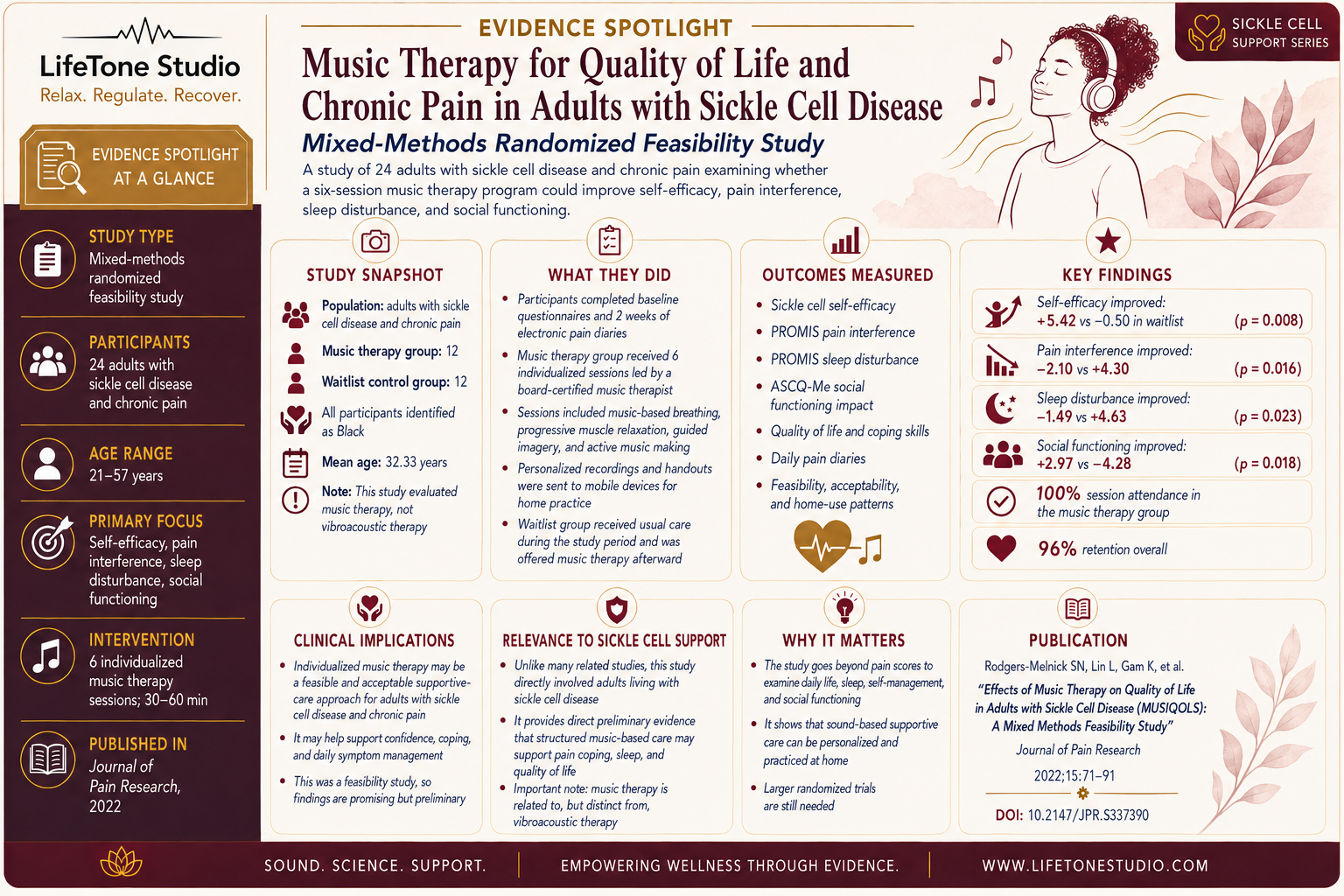
EVIDENCE SPOTLIGHT: Music Therapy for Quality of Life and Chronic Pain in Adults with Sickle Cell Disease
Adults living with sickle cell disease may experience chronic pain, disrupted sleep, reduced social functioning, emotional strain, and difficulty managing symptoms in daily life.
This mixed-methods feasibility study examined whether a six-session music therapy program was practical, acceptable, and potentially beneficial for adults with sickle cell disease and chronic pain.
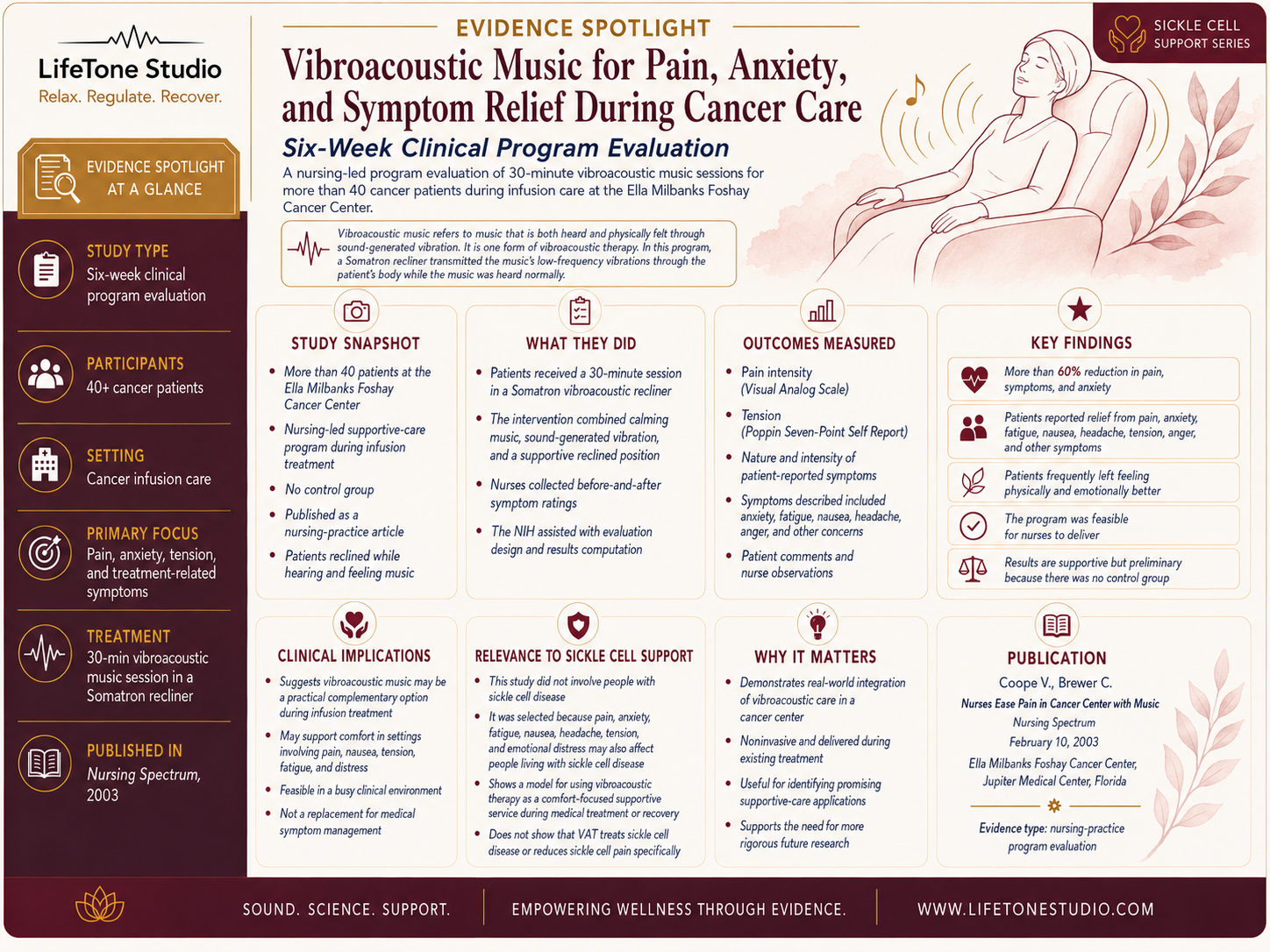
EVIDENCE SPOTLIGHT: Vibroacoustic Music for Pain, Anxiety, and Symptom Relief During Cancer Care
Cancer treatment can involve pain, anxiety, fatigue, nausea, tension, and other symptoms that make infusion visits physically and emotionally difficult.
This six-week clinical program evaluation examined whether vibroacoustic music could help reduce pain, anxiety, tension, and other symptoms in patients receiving care at the Ella Milbanks Foshay Cancer Center in Jupiter, Florida.
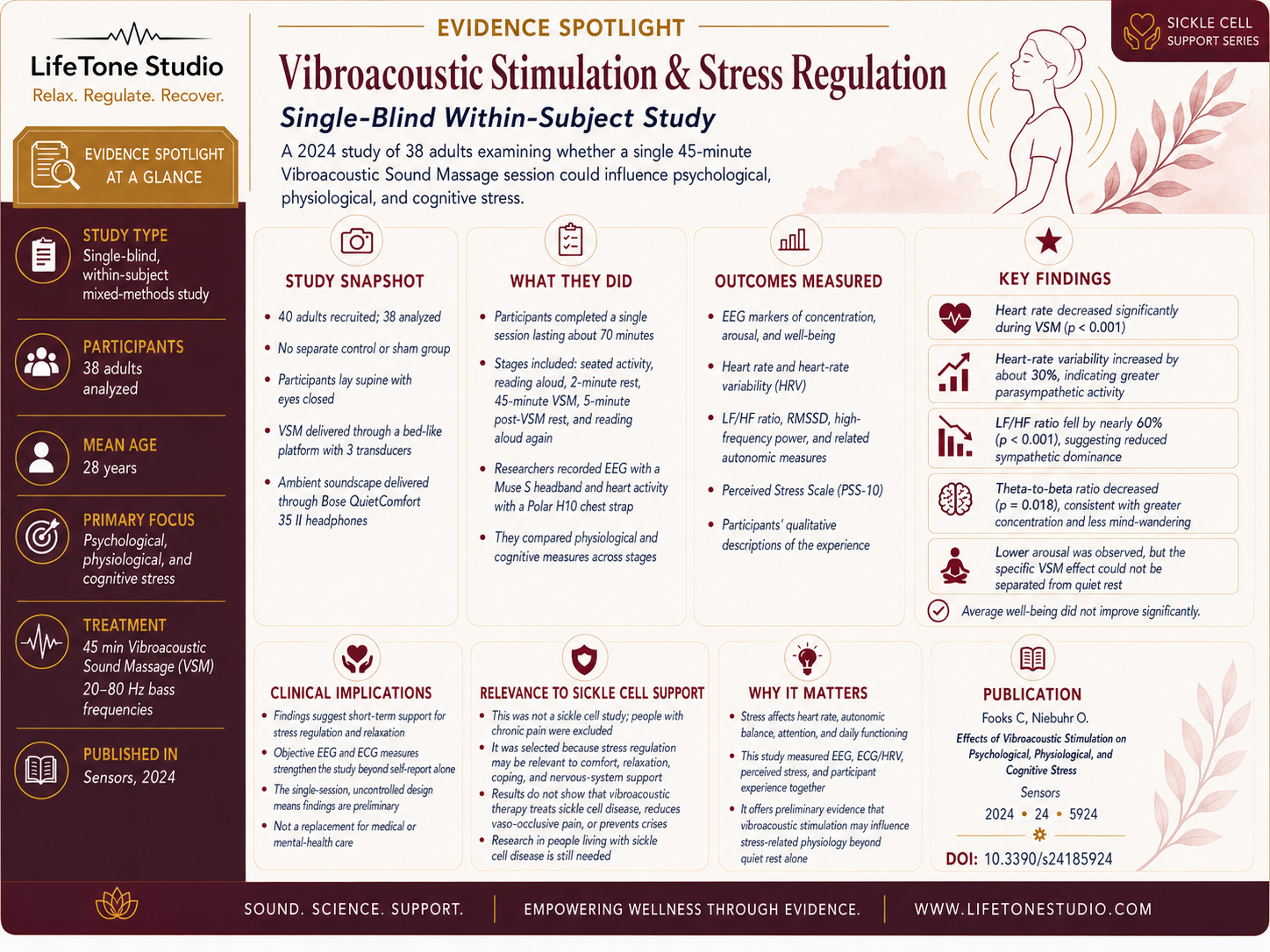
EVIDENCE SPOTLIGHT: Vibroacoustic Stimulation and Stress Regulation
Stress can affect the body, brain, attention, emotional regulation, cardiovascular function, and the balance between the sympathetic “fight-or-flight” response and the parasympathetic “rest-and-digest” response.
This study examined whether a single session of Vibroacoustic Sound Massage, or VSM, could influence psychological, physiological, and cognitive indicators of stress.
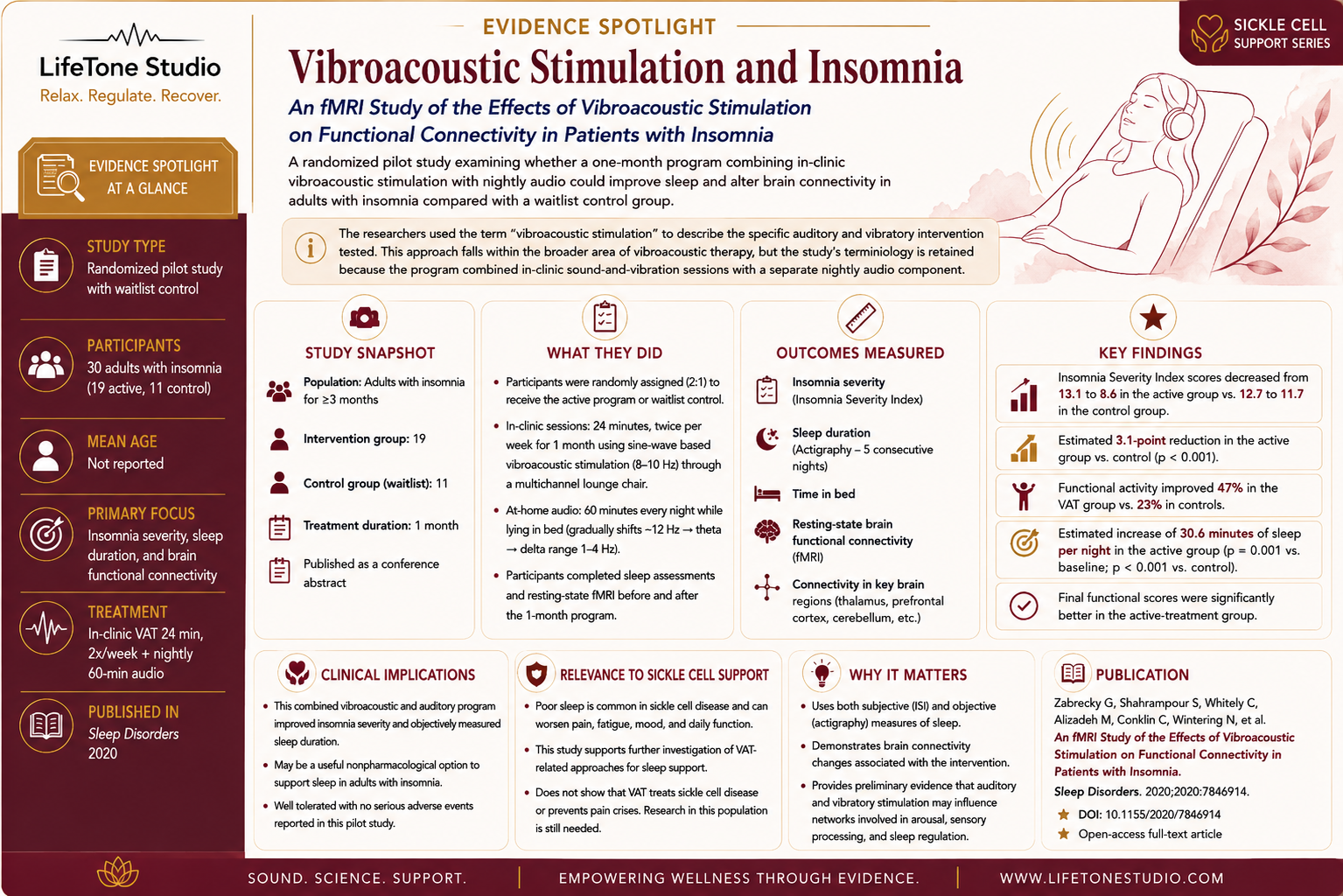
EVIDENCE SPOTLIGHT: Vibroacoustic Stimulation and Insomnia
Insomnia can affect sleep duration, daytime functioning, mood, cognition, and overall quality of life. It is often associated with a persistent state of physiological and neurological hyperarousal.
This randomized pilot study examined whether a one-month program combining vibroacoustic stimulation with nightly auditory stimulation could improve sleep in adults with insomnia and alter functional connectivity in brain regions involved in sleep regulation.
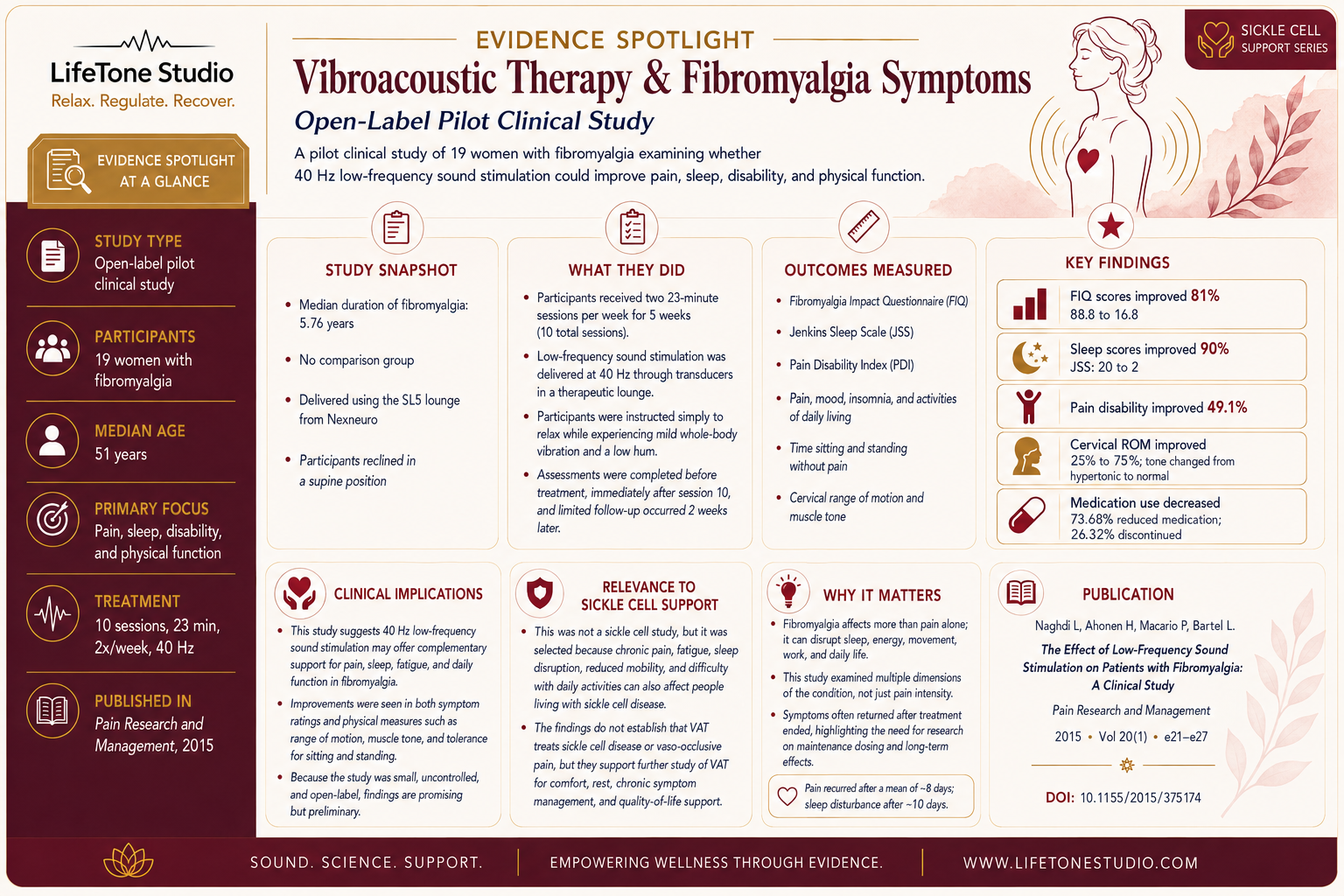
EVIDENCE SPOTLIGHT: Vibroacoustic Therapy and Fibromyalgia Symptoms
Fibromyalgia is a chronic condition associated with widespread pain, fatigue, disrupted sleep, reduced physical function, mood changes, and difficulty completing everyday activities.
This clinical pilot study examined whether low-frequency sound stimulation—also described by the authors as vibroacoustic therapy—could support women living with fibromyalgia. Nineteen participants received ten sessions of 40 Hz stimulation over five weeks.
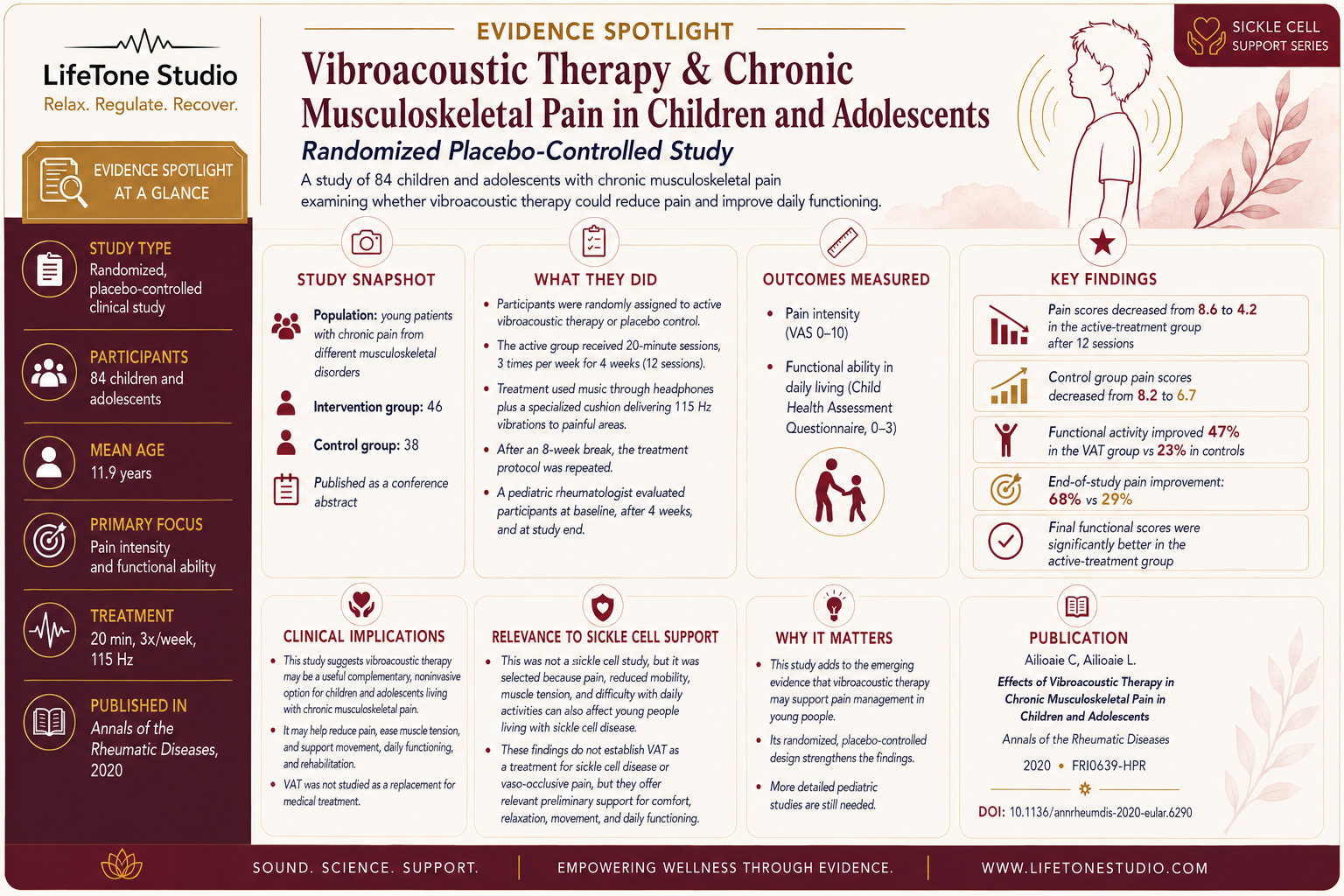
EVIDENCE SPOTLIGHT: Vibroacoustic Therapy for Chronic Musculoskeletal Pain in Children and Adolescents
Chronic musculoskeletal pain can interfere with movement, daily activities, school participation, emotional well-being, and quality of life in children and adolescents.
This randomized, placebo-controlled study examined whether vibroacoustic therapy could reduce pain and improve daily functioning in young patients with chronic musculoskeletal pain.
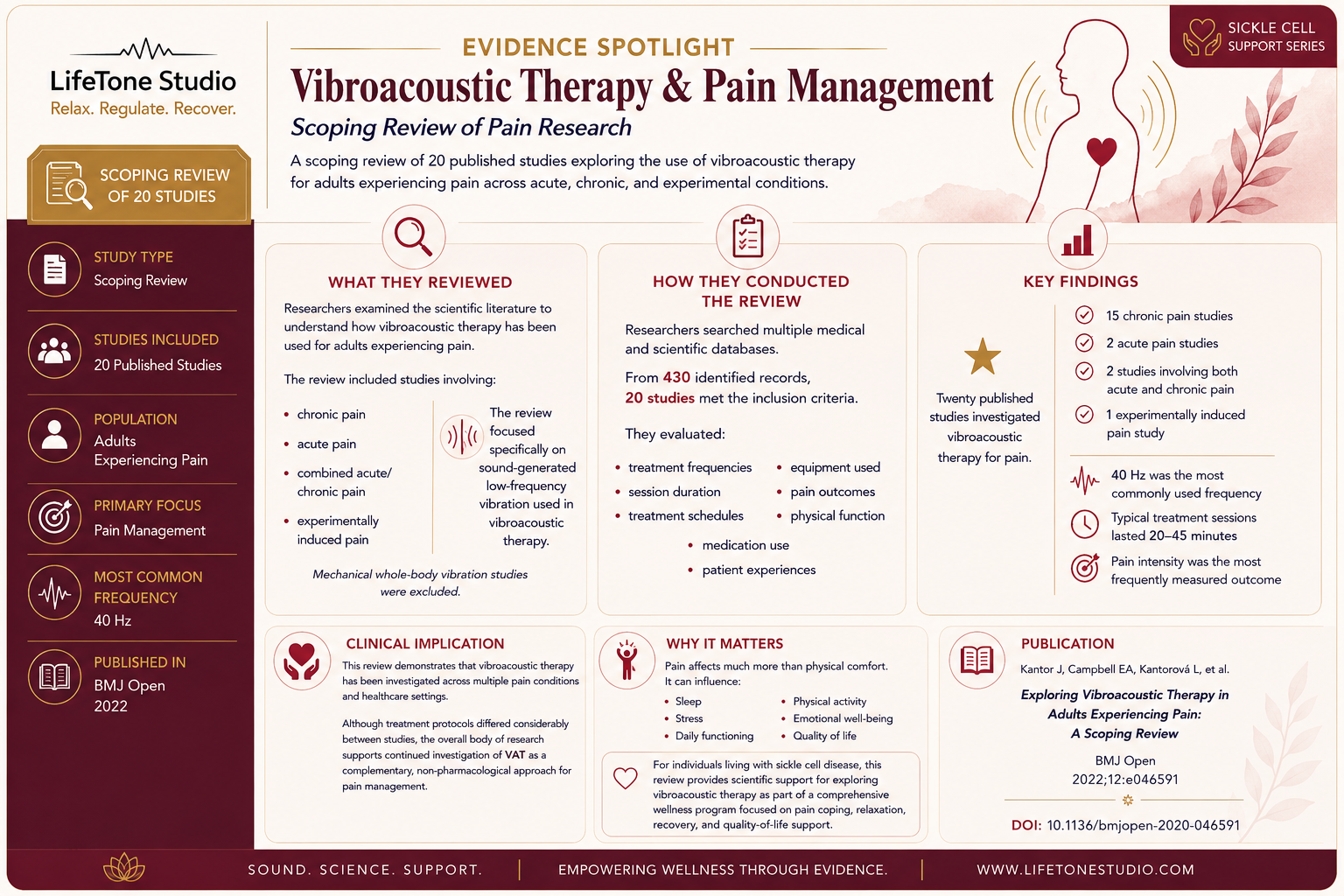
EVIDENCE SPOTLIGHT: Vibroacoustic Therapy and Pain Management
A scoping review examining how Vibroacoustic Therapy has been studied in adults experiencing pain, including the types of pain treated, the VAT protocols used, and the pain-related outcomes reported.
The review included research involving chronic pain, acute pain, combined acute and chronic pain, and experimentally induced pain.
Research Briefs: Sickle Cell Support Series
The Research Briefs offer a shorter look at additional studies that help expand the broader evidence base around vibroacoustic therapy, music-based interventions, pain, sleep, stress regulation, and supportive care.
These studies may involve different populations, smaller samples, early-stage research, clinical observations, or interventions that are related to—but not identical to—vibroacoustic therapy. Some do not include people with sickle cell disease directly.
Each Research Brief highlights:
What the researchers studied
The main findings
Why the study may be relevant to sickle cell support
Important limitations or evidence considerations
Full publication information
The Research Briefs are intended to identify promising areas of inquiry and explain why further research may be warranted. They should not be interpreted as proof that vibroacoustic therapy treats sickle cell disease, prevents vaso-occlusive crises, or replaces medical care.

Pain
-
Study Focus
This narrative review examined how sound vibration may affect the human body through physiological, neurological, biochemical, circulatory, and musculoskeletal mechanisms. The authors focused primarily on low-frequency sound up to 250 Hz, including vibroacoustic, whole-body, and localized vibration applications.What the Research Found
The review identified several possible pathways through which vibration may influence health, including changes in blood flow and endothelial activity, stimulation of sensory nerves, vibratory pain inhibition, muscle reflexes, bone metabolism, and neurological synchronization.The authors found that vibration is not a single uniform intervention. Its effects may depend on frequency, intensity, duration, method of delivery, and how much of the body is exposed.
Why It Matters for Sickle Cell Support
Pain, circulation, muscle tension, nervous-system signaling, and physical function are all relevant to the supportive-care needs of people living with sickle cell disease.This review provides a scientific framework for understanding why physically delivered sound vibration might influence comfort or regulation. However, it does not demonstrate that VAT improves sickle cell symptoms or alters sickle cell disease processes.
Evidence Note
This is a narrative mechanisms review, not a clinical trial. It draws from research involving several forms of vibration, some of which differ substantially from VAT. The proposed mechanisms should not be treated as proof of clinical effectiveness.Study & Publication
Bartel L, Mosabbir A. Possible Mechanisms for the Effects of Sound Vibration on Human Health.
Healthcare. 2021;9(5):597.
DOI: 10.3390/healthcare9050597 -
Study Focus
This continuing-education review examined the use of vibroacoustic sound therapy in nursing and healthcare settings, with emphasis on pain management, relaxation, stress reduction, and physiological responses.What the Research Found
The authors summarized research and clinical reports suggesting that vibroacoustic interventions may reduce pain, anxiety, tension, fatigue, headache, and some treatment-related symptoms.The review also discussed possible changes in blood pressure, pulse, respiration, muscle tone, and range of motion. It emphasized the potential for nurses to use vibroacoustic equipment as a noninvasive supportive-care tool.
Why It Matters for Sickle Cell Support
Pain and treatment-related distress are major concerns for people living with sickle cell disease. This review supports continued investigation of VAT as a comfort-focused, nonpharmacological intervention that could potentially complement—not replace—medical pain management.It also provides useful background for considering how VAT might fit into infusion centers, outpatient clinics, recovery spaces, or community wellness settings.
Evidence Note
This is a practice review, not a new clinical trial. The studies summarized used different devices, frequencies, populations, session lengths, and research designs. Many had small samples or no control groups, so the review cannot establish a standardized or proven VAT protocol.Study & Publication
Boyd-Brewer C, McCaffrey R. Vibroacoustic Sound Therapy Improves Pain Management and More.
Holistic Nursing Practice. 2004;18(3):111–118. -
Study Focus
This clinical study examined whether vibroacoustic therapy could improve postoperative pain relief after surgery for laryngeal cancer.What the Study Found
Eighty-seven patients were randomly assigned to a vibroacoustic group or routine-care control group. Reported pain-relief response rates were higher in the vibroacoustic group on postoperative days three, five, and seven.Why It Matters for Sickle Cell Support
The study is relevant because it examined VAT as an adjunct during a period of significant pain and physical stress. It does not show that VAT treats vaso-occlusive pain.Evidence Note
The available source is a brief abstract. Important details about pain measurement, medication use, blinding, and statistical methods are limited.Study & Publication
Zhang Y, Xia H, Yue G. Application of Vibroacoustic Therapy in the Nursing Care of Postoperative Pain Relief in Patients with Laryngeal Cancer.
Journal of Nursing Science. 2005. -
Study Focus
This practitioner case report described repeated Vibroacoustic Harp Therapy and recorded low-frequency stimulation for one person with severe trigeminal neuralgia.What the Study Reported
The client reported reduced stabbing pain, less pressure, longer periods between episodes, and improved ability to cope over approximately nine weeks.Why It Matters for Sickle Cell Support
The case raises questions about whether sound vibration might influence pain perception and coping in difficult-to-manage pain conditions.Evidence Note
This is a single case report with no control group, standardized outcome assessment, or independent evaluation.Study & Publication
Kunkel K. VAHT Helps a Trigeminal Neuralgia Sufferer.
The Harp Therapy Journal. Fall 2012. -
Study Focus
This randomized pilot study examined music combined with low-frequency abdominal vibration in older adults with chronic musculoskeletal pain.What the Study Found
Pain decreased immediately after sessions in both groups, but the low-frequency group did not show superior or clinically meaningful pain relief over time compared with the higher-frequency comparison group.Why It Matters for Sickle Cell Support
This cautious result helps prevent overstatement. Music and vibration may provide short-term comfort, but the tested low-frequency protocol was not clearly superior.Evidence Note
Both groups received music and vibration, so there was no music-only or no-treatment condition.Study & Publication
Eshuis TAH, Stuijt PJC, Timmerman H, Nielsen PML, Wolff AP, Soer R. Music and Low-Frequency Vibrations for the Treatment of Chronic Musculoskeletal Pain in Elderly: A Pilot Study.
PLOS ONE. 2021;16(11):e0259394.
DOI: 10.1371/journal.pone.0259394
Stress & Nervous System Regulation
-
Study Focus
This pilot study investigated whether a 20-minute whole-body vibroacoustic session could influence physiological indicators associated with stress.What the Study Found
Researchers observed general downward trends in heart rate and skin-conductance measures, which they interpreted as consistent with relaxation and reduced physiological arousal.Why It Matters for Sickle Cell Support
Stress regulation may be relevant to pain coping, sleep, fatigue, and daily functioning for people living with sickle cell disease.Evidence Note
The study included only eight nonclinical participants and had no comparison group. Music, vibration, quiet rest, and expectation could not be separated.Study & Publication
Delmastro F, Di Martino F, Dolciotti C. Physiological Impact of Vibro-Acoustic Therapy on Stress and Emotions Through Wearable Sensors.
Pilot conference research paper, 2018. -
Study Focus
This pilot randomized controlled trial examined whether low-frequency sound vibration could influence acute stress responses in university students.What the Study Found
The low-frequency vibration group showed significant between-group improvements in selected heart-rate variability measures. Self-reported stress and muscle relaxation did not show clear advantages.Why It Matters for Sickle Cell Support
The study is relevant because it used objective autonomic measures and suggests a possible effect on nervous-system regulation.Evidence Note
Participants were healthy students, not people with chronic illness. The intervention combined music and vibration, and the sample was modest.Study & Publication
Kantor J, Vilímek Z, Vítězník M, et al. Effect of Low Frequency Sound Vibration on Acute Stress Response in University Students—Pilot Randomized Controlled Trial.
Frontiers in Psychology. 2022;13:980756.
DOI: 10.3389/fpsyg.2022.980756
Foundational VAT Research
-
Study Focus
This educational review described the history, equipment, major approaches, and reported clinical uses of vibroacoustic therapy.What the Research Found
The article summarized reported applications involving pain, anxiety, relaxation, physical rehabilitation, symptom relief, behavioral support, and comfort during medical care.Why It Matters for Sickle Cell Support
It provides historical and clinical context for how VAT has been used in healthcare and wellness settings.Evidence Note
This is a broad educational review, not a controlled study. Many examples were based on early reports, case observations, or program evaluations.Study & Publication
Boyd-Brewer C. Vibroacoustic Therapy: Sound Vibrations in Medicine.
Alternative and Complementary Therapies. October 2003. -
Study Focus
This doctoral thesis included several foundational studies examining VAT in clinical and nonclinical populations.What the Research Found
The work reported findings related to muscle tone, spasticity, range of motion, arousal, heart rate, blood pressure, and perceived body-location effects of low-frequency tones.Why It Matters for Sickle Cell Support
The thesis helped establish early methods for separating vibration effects from music alone and remains useful for understanding VAT’s foundational evidence base.Evidence Note
The thesis contains multiple small studies rather than one definitive trial, and none involved people with sickle cell disease.Study & Publication
Wigram AL. The Effects of Vibroacoustic Therapy on Clinical and Non-Clinical Populations.
Doctoral thesis, St. George’s Hospital Medical School, University of London, 1997.
Clinical Programs
-
Study Focus
This NIH program evaluation examined immediate symptom and relaxation changes after guided vibroacoustic music sessions in hospitalized adults with mixed medical conditions.What the Study Found
The evaluation reported an estimated 33.4% improvement in relaxation and an average symptom-intensity reduction of approximately 53%. Reported reductions included nausea, headache, tension, anxiety, pain, depressed mood, and fatigue.Why It Matters for Sickle Cell Support
The symptoms measured overlap with concerns that may affect people living with sickle cell disease. The program also shows how vibroacoustic music was integrated into a hospital setting.Evidence Note
This was an uncontrolled convenience-sample program evaluation. The effects of vibration cannot be separated from music, reclining, therapist guidance, quiet rest, or expectancy.Study & Publication
Patrick G. The Effects of Vibroacoustic Music on Symptom Reduction: Inducing the Relaxation Response Through Good Vibrations.
National Institutes of Health clinical program evaluation.
Published in an IEEE medical publication, 1999.