Dementia Evidence Spotlights
What is the research showing about sound, vibration, and dementia?

Research into vibroacoustic therapy, rhythmic sensory stimulation, and 40 Hz stimulation is opening new possibilities for supporting people living with Alzheimer’s disease and other forms of cognitive impairment.
Across case studies, pilot trials, small-group research, and broader reviews, investigators have explored changes in cognition, mood, sleep, daily functioning, engagement, brain connectivity, and quality of life.
LifeTone has gathered five studies that are especially relevant to its dementia-focused work. Together, they help explain why repeated sensory stimulation—and 40 Hz in particular—deserves thoughtful attention.

What the Research Shows
While the studies use different methods and examine different outcomes, several meaningful themes appear across the research:
repeated stimulation may be more meaningful than isolated exposure;
40 Hz sound and sensory stimulation can produce measurable responses in people living with dementia;
benefits may extend beyond the session itself into sleep, mood, daily functioning, communication, and engagement;
people at different stages of dementia may be able to participate and respond;
long-term and home-based use may offer opportunities for continuity;
and low-frequency vibration provides a nonverbal, low-demand form of sensory support.
These findings form the research foundation for LifeTone’s structured dementia-focused approach.
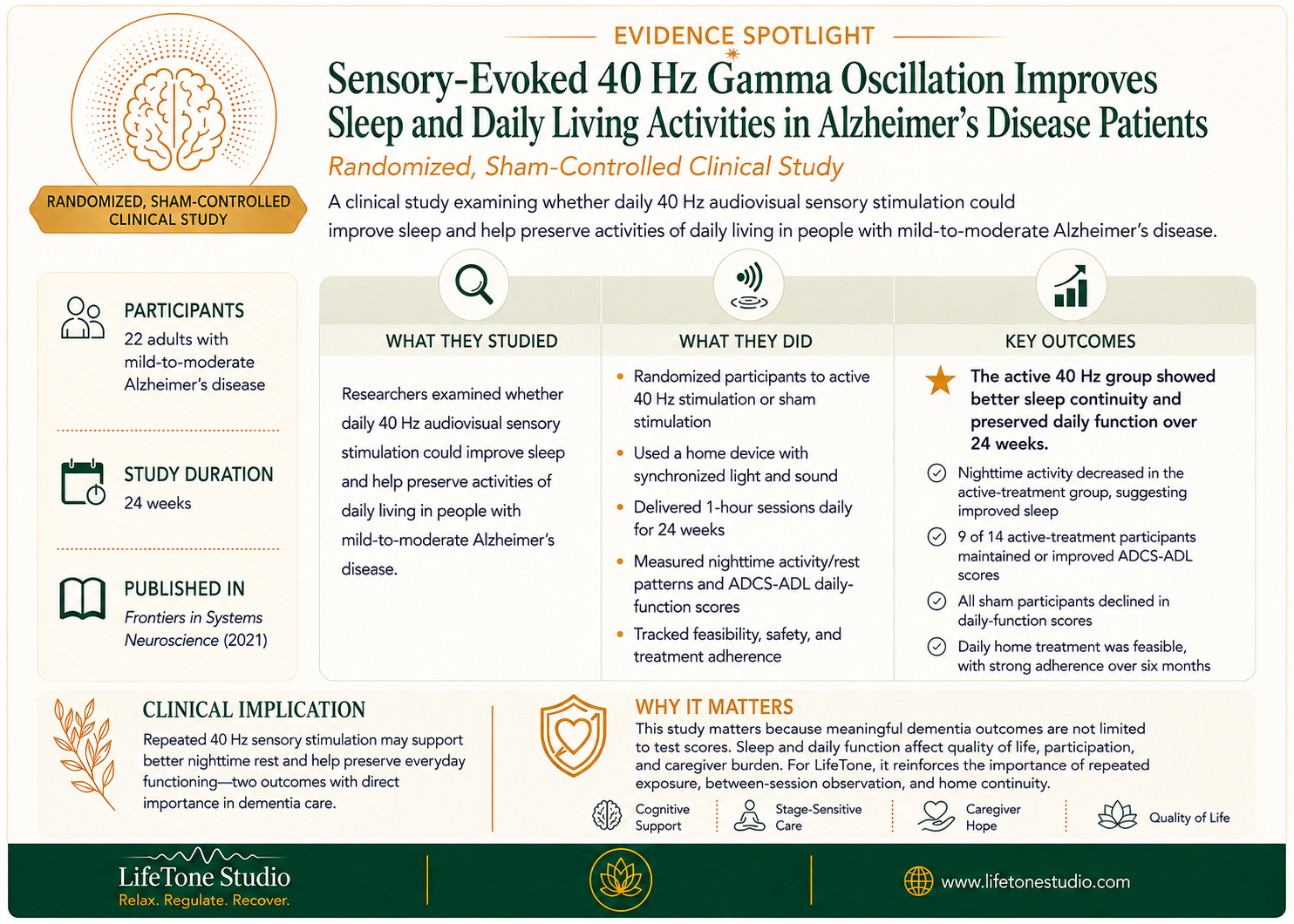
Evidence Spotlight: Sensory-Evoked 40 Hz Gamma Oscillation Improves Sleep and Daily Living Activities in Alzheimer’s Disease
This 2021 randomized, Sham-Controlled Clinical Study examined whether daily 40 Hz audiovisual sensory stimulation could improve sleep and help preserve everyday functioning in people living with mild-to-moderate Alzheimer’s disease.
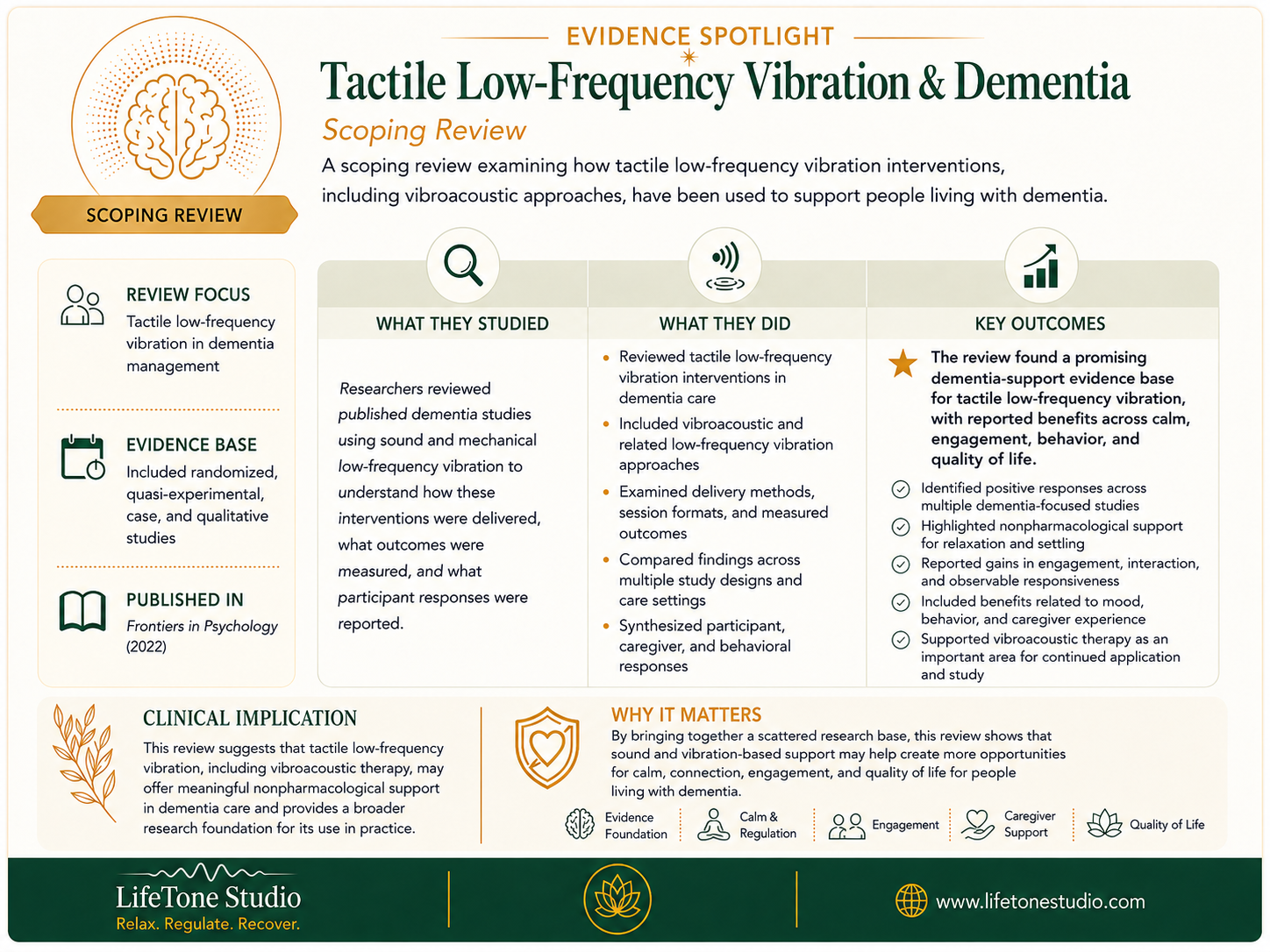
Evidence Spotlight: Tactile Low-Frequency Vibration in Dementia Management
This 2022 scoping review examined the existing research on tactile low-frequency vibration for people living with dementia. Rather than evaluating one treatment protocol, the authors mapped the broader field to understand what kinds of vibration-based interventions had been studied, how those interventions were delivered, what participant responses were reported, and where the evidence showed meaningful patterns or unanswered questions. (Frontiers)
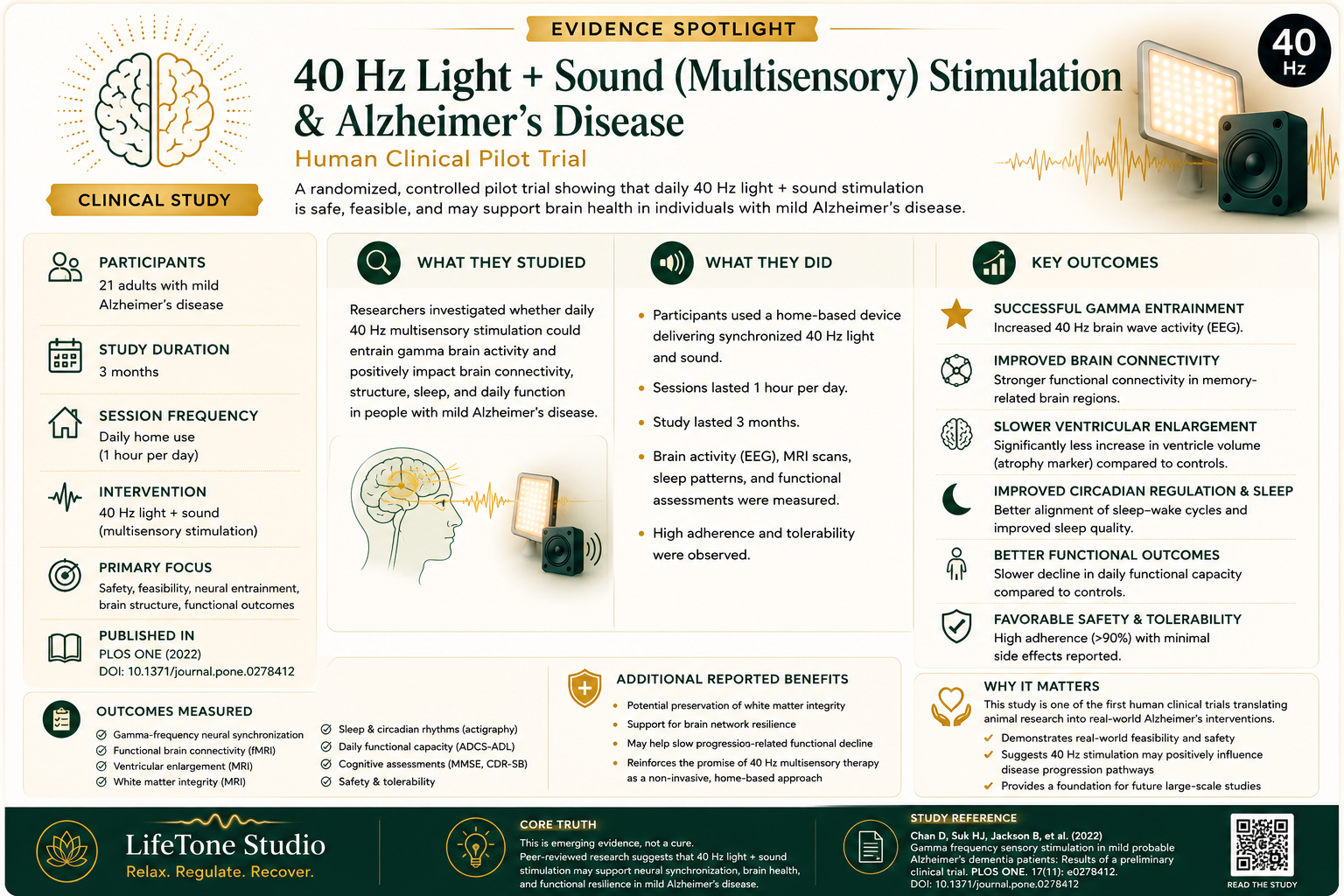
Evidence Spotlight: 40 Hz Light + Sound Stimulation & Alzheimer’s Disease (AD)
A pioneering human clinical trial examining whether daily 40 Hz multisensory stimulation (combined light and sound) could safely entrain gamma brain rhythms in individuals with mild Alzheimer’s disease and potentially slow functional decline, preserve brain structure, and improve sleep/circadian regulation.
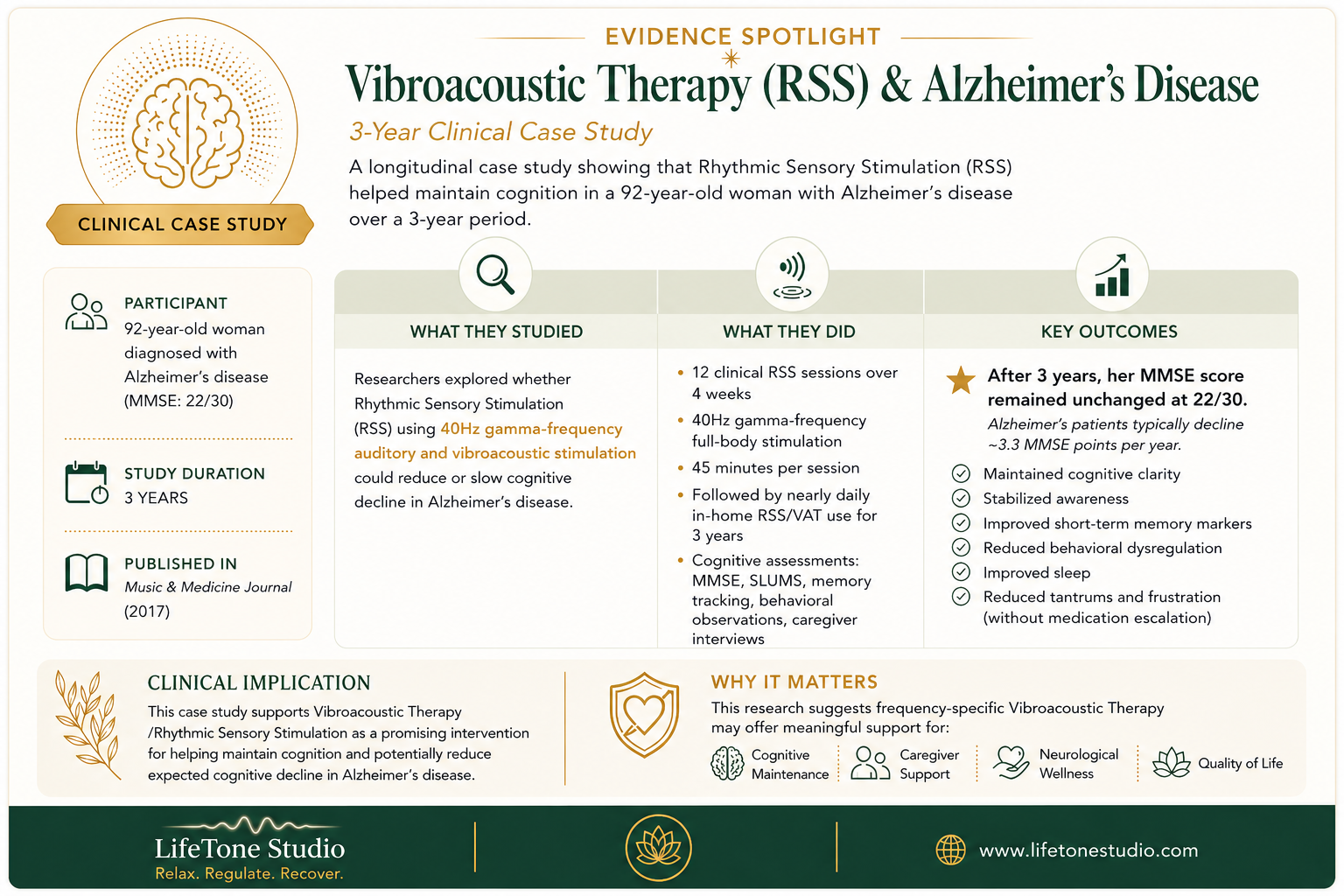
Evidence Spotlight: Vibroacoustic Therapy (40 Hz) & Alzheimer’s Disease
A 3-year longitudinal clinical case study investigating whether 40Hz gamma-frequency Vibroacoustic Therapy (Rhythmic Sensory Stimulation) could help maintain cognition and reduce expected cognitive decline in a woman diagnosed with Alzheimer’s disease.
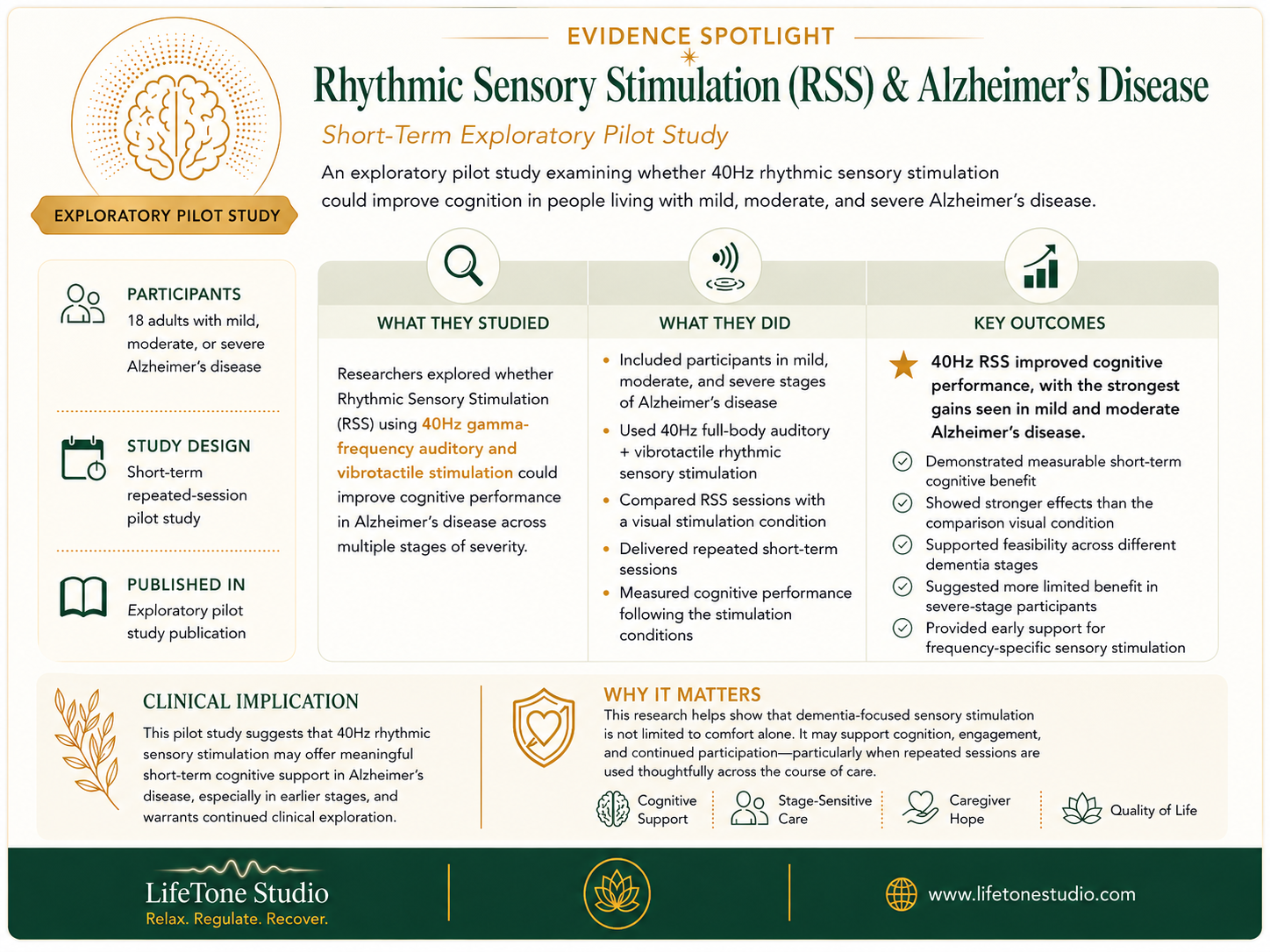
Evidence Spotlight: Short-Term Effects of Rhythmic Sensory Stimulation in Alzheimer’s Disease
This exploratory pilot study examined whether 40 Hz Rhythmic Sensory Stimulation, delivered as low-frequency sound and vibration through a physioacoustic chair, could support cognition and observable responsiveness in people living with Alzheimer’s disease.
Ready to Explore What This Research Could Mean in Practice?

Research helps us understand what may be possible. The next step is considering how dementia-focused VAT may fit the needs of a particular person, family, organization, or community.
For Families
Explore whether dementia-focused VAT may be an appropriate supportive option for someone you love.
For Organizations
Learn how LifeTone may support the people, families, caregivers, or staff your organization already serves.
Have a general question or research inquiry?