What Is Vibroacoustic Therapy?
A supportive experience you can hear—and feel
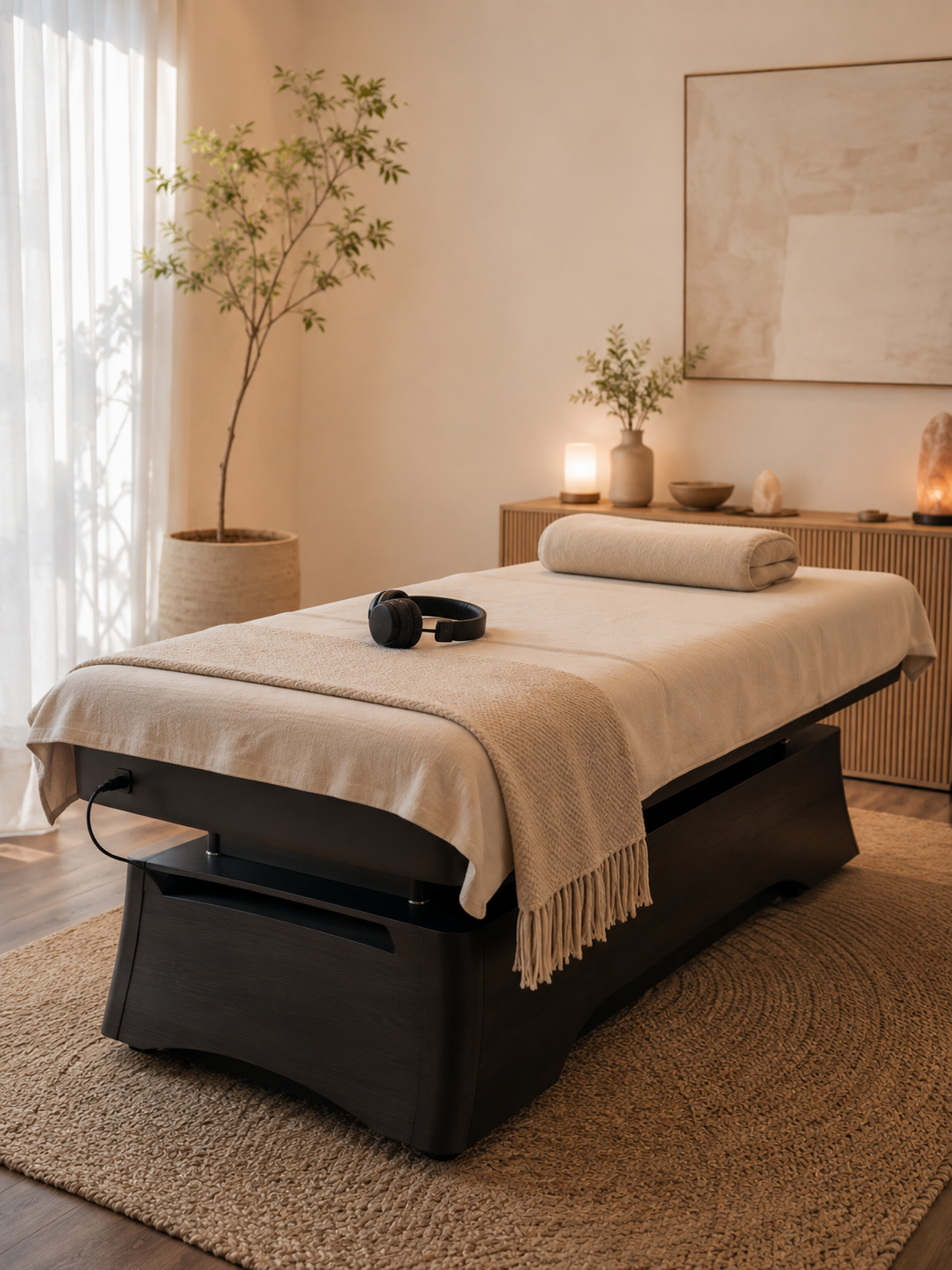
Vibroacoustic therapy, often called VAT, uses low-frequency sound vibrations that are delivered through specialized equipment while the participant rests comfortably.
The sound is experienced in two ways:
Heard through music or sound
Felt as gentle vibration through the body
The low-frequency vibrations may be delivered through a treatment table, supportive chair, recliner, or another adapted setup. The equipment allows the participant’s body to receive the vibration directly rather than relying only on sound heard through the ears.
Music, nature sounds, or other carefully selected audio may accompany the vibration. The sound helps shape the experience, while the low-frequency component provides the physical vibration felt through the equipment.
VAT is noninvasive. Nothing is inserted into or attached to the body, and the participant does not need to complete exercises, remember instructions, or explain what they are experiencing.
Vibroacoustic therapy creates a low-demand sensory experience in which sound can be both heard and physically felt, allowing the body and nervous system to respond in ways that listening alone may not provide.

How Does a VAT Session Feel?
A calm, low-demand experience shaped around the participant
During a VAT session, the participant rests comfortably while low-frequency sound vibrations are delivered through specialized equipment.
The experience may include:
Gentle vibration felt through the body
The vibration is received through the treatment table, supportive chair, recliner, or adapted setup.Music, nature sounds, or other selected audio
Sound may be heard through speakers or headphones while the vibration is felt through the body.A comfortable resting position
Pillows, blankets, positioning support, and other accommodations may be used to help the participant settle.No exercises or performance requirements
There are no movements to complete, answers to remember, or tasks to perform correctly.No need to follow complex instructions
The participant does not need to understand the technology or explain the experience in detail.Flexible equipment options
Sessions can be adapted for people who are most comfortable on a table, in a chair, or in a reclined position.
The participant is not asked to work through the session. The experience is designed to meet them where they are and allow them to receive the sound and vibration in a comfortable, supported way.
The LifeTone Dementia Approach
A structured process designed to reveal patterns over time
LifeTone does not approach dementia-focused VAT as a series of unrelated relaxation sessions. The work is organized around repeated exposure, consistent observation, and caregiver insight so that each person’s response can be understood more clearly over time.
The LifeTone approach includes:
A structured series of sessions
Dementia-focused VAT is offered through a planned series rather than occasional, isolated visits. This reflects the research-informed use of repeated sessions and allows enough time to observe whether meaningful patterns emerge.Baseline information
Before sessions begin, LifeTone gathers information about the participant’s usual communication, mood, engagement, sleep, energy, comfort, routines, mobility, and current concerns.A dementia-focused protocol
Session frequency, duration, sound, vibration, positioning, and other elements are selected with reference to the available dementia and 40 Hz research, then adapted to the participant’s needs and response.Practitioner observation
LifeTone pays attention to comfort, settling, alertness, engagement, communication, mood, responsiveness, and other notable changes during and immediately after each session.
Caregiver feedback
Family members and care partners help identify changes that may appear later in the day, between sessions, or within familiar routines and relationships.Review of patterns over time
Session observations and caregiver reports are considered together to determine whether responses are recurring, changing, becoming more noticeable, or remaining limited.Home-continuity consideration
When a participant responds meaningfully and continued VAT appears appropriate, LifeTone may help the family explore a home setup, caregiver guidance, and an individualized continuity plan.
The purpose of the LifeTone approach is not to force every participant into the same protocol or outcome. It is to apply a consistent, research-informed process while remaining attentive to the individual person receiving the care.
What LifeTone Pays Attention To
Response can show up in more than one way
A participant’s response to VAT may be immediate, subtle, delayed, or easier for a caregiver to recognize after the session. LifeTone therefore pays attention to the whole experience—not only whether the person appeared relaxed while receiving VAT.
Areas of observation may include:
Conversation and communication
Changes in speech, storytelling, recall, word-finding, participation in conversation, or willingness to communicate.Comfort
Physical ease during the session, tolerance of the vibration, positioning needs, and any changes in self-reported or observed discomfort.Energy
Whether the participant appears more alert, active, fatigued, motivated, or able to participate in daily activities.Sleep and napping
Changes in sleep quality, daytime sleepiness, napping patterns, ease of settling at night, or waking patterns.Between-session changes
Responses that appear later that day or over the following days, including changes noticed within familiar routines, relationships, activities, or communication.
Calm and settling
Changes in tension, restlessness, agitation, breathing, or the ability to become physically comfortable.Engagement
Increased attention to people, music, conversation, activities, or the surrounding environment.Responsiveness
Changes in eye contact, facial expression, movement, vocalization, answers, or reactions to others.Mood
Shifts in ease, enjoyment, frustration, anxiety, emotional expression, or overall disposition.
No single observation determines whether VAT is meaningful. LifeTone considers repeated patterns across sessions, together with caregiver insight, to develop a fuller understanding of how each participant responds.
The Research Foundation
Promising research, applied with care
LifeTone’s dementia-focused approach is informed by a developing body of research exploring low-frequency vibration, rhythmic sensory stimulation, and 40 Hz gamma-frequency stimulation in Alzheimer’s disease, mild cognitive impairment, and other forms of dementia.
Researchers are studying 40 Hz because gamma-frequency brain activity is associated with attention, memory, and communication between brain regions. In Alzheimer’s disease, this activity may become disrupted. Early human studies have explored whether repeated 40 Hz stimulation delivered through sound, light, vibration, or combined sensory methods may support neural activity and influence cognition, function, mood, sleep, or disease-related changes. (PubMed)
What the published research includes
Short-term vibroacoustic studies: One exploratory pilot used 40 Hz sound and vibrotactile stimulation with people at different stages of Alzheimer’s disease and examined short-term effects on cognition and behavior. (PubMed)
Small-group and pilot studies: A nine-participant exploratory study reported improvements in mood, memory, and cognition after gamma-frequency stimulation, while other small human studies have examined feasibility, safety, sleep, daily functioning, and cognitive outcomes. (PubMed)
Longer-term case reports: A published three-person case series reported maintenance of cognition and improved mood over one year among participants with Alzheimer’s disease or mild cognitive impairment who received 40 Hz auditory stimulation through a vibroacoustic chair five times per week. (PubMed)
Broader reviews of tactile vibration and dementia: A scoping review identified randomized trials, quasi-experimental studies, case reports, and qualitative research examining tactile low-frequency vibration and vibroacoustic approaches in dementia care. (Frontiers)
What this research means
The research provides a meaningful reason to continue studying 40 Hz sensory and vibroacoustic stimulation in dementia. Some studies have reported encouraging findings related to cognition, mood, sleep, daily functioning, engagement, or cognitive stability.
The evidence is still developing. Many studies involve small groups, different types of stimulation, varying protocols, and limited follow-up. Current research does not establish that VAT will produce a specific result for every person or that it will reliably stop or reverse dementia progression. Systematic reviews continue to note small sample sizes and methodological differences across studies. (PubMed)
How LifeTone uses the evidence
LifeTone uses the research to inform:
the use of repeated sessions rather than isolated exposure;
the selection of dementia-focused frequencies and protocols;
the importance of consistent observation over time;
caregiver involvement;
and realistic expectations about individual response.
The research guides the approach. It does not replace careful attention to the person receiving VAT.
LifeTone offers dementia-focused VAT because the emerging evidence warrants thoughtful application and continued observation.
Setting Clear Expectations for VAT
A supportive approach with a clear and responsible role
Understanding what vibroacoustic therapy can—and cannot—offer helps families and organizations make informed decisions and maintain realistic expectations.
-
It delivers low-frequency sound vibration through specialized equipment while the participant rests comfortably. Nothing is inserted into the body, and no exercises are required.
-
The reserach does not support VAT as a way to cure, reverse, or guarantee that dementia will stop progressing.
-
It is intended to complement—not replace—medical evaluation, prescribed treatment, rehabilitation, mental-health care, or other professional services.
-
A participant does not need to describe the experience, answer questions, remember instructions, or communicate verbally to receive the sound and vibration.
-
VAT may incorporate music, but its defining feature is the delivery of low-frequency sound vibration through equipment so that the sound is physically felt. Music therapy is a distinct clinical discipline delivered by a credentialed music therapist and may use musical experiences to address individualized therapeutic goals.
-
Some people may show immediate or noticeable changes, while others may respond subtly, gradually, inconsistently, or not at all. A meaningful response for one person does not guarantee the same result for another.
LifeTone approaches VAT as a research-informed supportive option—one that may create meaningful opportunities for comfort, engagement, connection, and continued participation while respecting the limits of the current evidence.
Who May Participate?
Participation is considered individually, not by diagnosis alone.
People at different stages of dementia may be able to participate in VAT. Suitability is based on the whole person—their comfort, physical needs, communication style, care support, and ability to receive the experience safely—not simply the stage or name of the diagnosis.
LifeTone considers:
General suitability
Whether the participant can rest comfortably, tolerate gentle sound and vibration, and receive the session without significant distress.Stage of dementia
VAT may be appropriate for people in early, moderate, or more advanced stages. The setup, session length, level of support, and ways response is observed may change as dementia progresses.Positioning and comfort needs
Sessions may be adapted for a treatment table, supportive chair, recliner, or another appropriate setup. Mobility limitations, stiffness, pain, difficulty transferring, and the need for pillows or other supports are discussed before participation.Communication needs
Verbal communication is not required. People who communicate primarily through facial expression, movement, vocalization, behavior, or caregiver-observed changes may still participate.Caregiver or staff involvement
A caregiver, family member, or familiar staff person may help provide baseline information, support transitions and positioning, remain nearby when appropriate, and share observations after the session.
When an additional conversation may be needed
A more detailed suitability conversation may be appropriate when the participant:
has significant pain, mobility, positioning, or transfer needs;
becomes distressed by unfamiliar environments, sound, touch, or vibration;
has difficulty communicating discomfort;
has recently experienced a major medical or medication change;
uses implanted or specialized medical equipment;
requires hands-on personal care or behavioral support during visits;
or has needs that may require coordination with a caregiver, facility, or healthcare professional.
The goal is not to determine whether someone fits a rigid program. It is to determine how—or whether—VAT can be offered in a way that respects the person’s comfort, dignity, needs, and current level of support.
Equipment and Delivery
Flexible setups designed around comfort, access, and setting
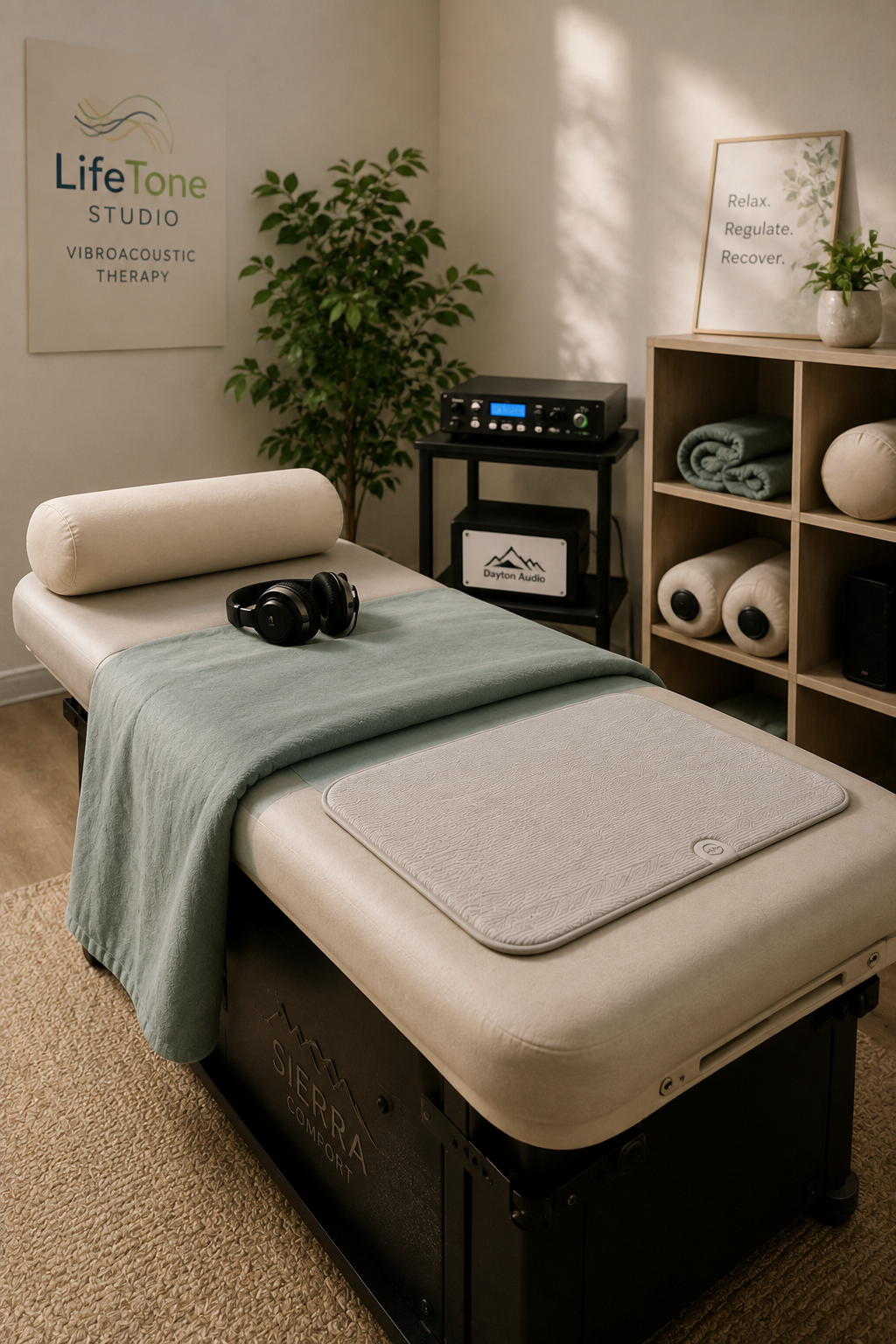
Vibroacoustic therapy can be delivered through different types of equipment depending on the participant’s physical needs, the environment, and the purpose of the session.
Possible setups include:
Treatment table
The participant lies on a padded table equipped to deliver low-frequency vibration through the body.Supportive chair or recliner
Vibration may be delivered through a chair-based or reclined setup for people who are more comfortable seated or who have difficulty getting onto a table.Adapted positioning
Pillows, bolsters, blankets, and other supports may be used to improve comfort, protect sensitive areas, and accommodate mobility, stiffness, pain, or postural needs.
Where sessions may take place
LifeTone Studio
Individuals and families may attend sessions in a dedicated studio setting.Mobile or onsite delivery
LifeTone may bring equipment to an organization, community setting, or other appropriate location when space, power, privacy, access, and participant support can be arranged.Organizational programs
Equipment and scheduling may be structured for demonstrations, small pilots, rotating participants, or limited onsite programming.Home-continuity support
When continued VAT at home appears appropriate, LifeTone may help families explore suitable equipment, positioning, caregiver guidance, and a practical home routine.
How the vibration is delivered
Low-frequency sound is sent through transducers built into or attached to the equipment. These transducers convert the audio signal into gentle physical vibration that can be felt through the body.
Music, nature sounds, or other selected audio may be heard through headphones or speakers while the low-frequency component is delivered through the table, chair, recliner, or adapted support.
Comfort and accessibility
Before participation, LifeTone considers:
preferred resting position;
ability to transfer safely;
mobility limitations;
pain, stiffness, or pressure-sensitive areas;
tolerance for sound and vibration;
need for caregiver or staff assistance;
wheelchair or mobility-device access;
and the amount of privacy and quiet available.
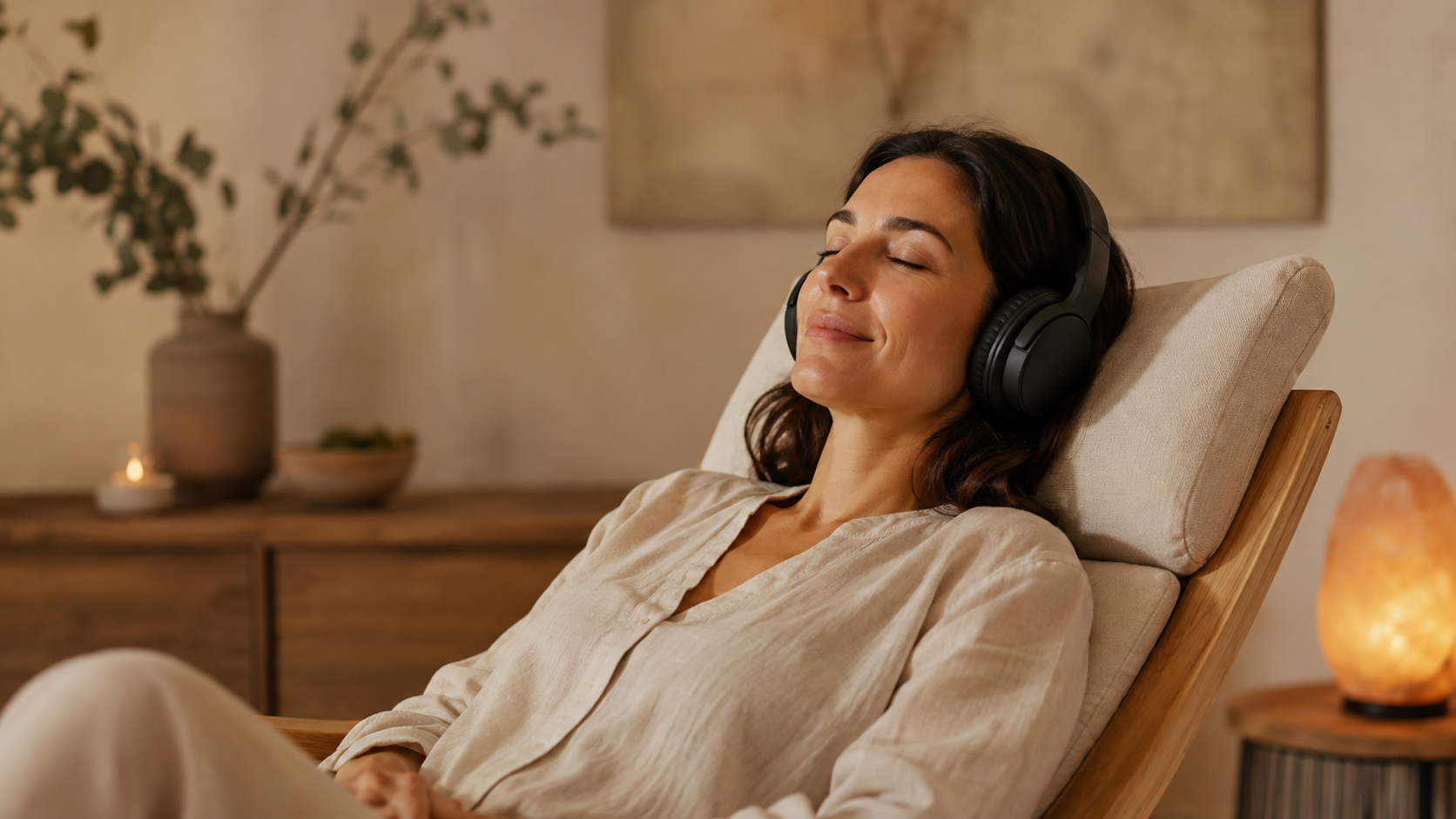
The equipment is chosen to serve the person—not the other way around. LifeTone adapts the delivery method whenever possible so the participant can receive VAT with comfort, dignity, and appropriate support.
Your Questions, Answered
-
Most people describe the vibration as gentle and steady—similar to a soft humming, pulsing, or resonance felt through the body. The intensity can be adjusted based on the participant’s comfort and response, and it should not feel painful or forceful.
Some people may not consciously hear the low-frequency sound or clearly feel the vibration. This does not necessarily mean that the equipment is not delivering the sound and vibration or that the participant is not receiving the stimulation. LifeTone therefore considers the person’s broader response—including relaxation, engagement, mood, communication, energy, and changes observed after the session—rather than relying only on whether the participant reports feeling the vibration.
-
Yes. VAT does not depend on speech, memory, or the ability to explain the experience. LifeTone may observe facial expression, movement, breathing, vocalization, eye contact, settling, responsiveness, and behavior. Caregiver or staff observations also help provide context.
-
No. The sound does not need to be loud for the vibration to be felt. Volume and vibration intensity are controlled separately and adjusted to support comfort. Music or sound may be delivered through headphones or speakers, depending on the participant and setting.
-
The frequency depends on the purpose of the session and the protocol being followed. LifeTone’s dementia-focused work may include 40 Hz, a frequency being studied in relation to gamma brain activity, cognition, and Alzheimer’s disease. Other low frequencies may also be incorporated depending on the participant’s needs, comfort, and the intended experience.
-
Session length may vary based on the protocol, the participant’s goals, tolerance, stage of dementia, positioning needs, and the setting in which VAT is delivered.
Sessions may be offered in 15-, 23-, 30-, 45-, or 60-minute increments. The appropriate length is selected according to the purpose of the session and the individual needs of the participant.
Dementia-focused VAT is generally provided as part of a structured series rather than as an isolated experience. The recommended session length and schedule are discussed before participation begins.
-
Any sensory experience can become uncomfortable or overstimulating for some people, particularly those who are sensitive to sound, vibration, unfamiliar surroundings, or prolonged stimulation. LifeTone begins with careful observation and adjusts the volume, vibration intensity, session length, audio, positioning, or environment when needed. A session may be paused or ended when the participant shows discomfort or distress.
-
Yes, in some circumstances. When a participant responds well and continued VAT appears appropriate, LifeTone may help the family explore equipment, positioning, sound delivery, caregiver guidance, and a practical home routine. Home use should follow an individualized plan rather than simply reproducing a studio protocol without support.
-
Caregivers may notice changes during the session, later that day, or between sessions. Helpful areas to observe include:
calm, tension, restlessness, or agitation;
alertness, energy, or fatigue;
mood and emotional expression;
conversation, word-finding, or storytelling;
eye contact and engagement;
participation in familiar activities;
comfort or signs of discomfort;
sleep quality and napping;
and whether any change appears repeatedly after sessions.
Caregivers are not being asked to diagnose or prove that VAT caused a change. Their role is to share what they observe so that patterns can be considered over time.
Questions about VAT are best answered in relation to the individual person. Dementia stage, sensory preferences, physical needs, communication style, caregiver support, and response all help shape how the experience is delivered.
Choose Your Next Path
Where would you like to go from here?
You may be learning about dementia-focused VAT from the perspective of a family member, an organization, or someone who wants to understand the evidence more closely. Choose the path that best reflects what you need next.

For Families
I am exploring VAT for someone I love.
Learn about suitability, the LifeTone family pathway, what participation involves, and how caregiver observations help guide the process.

For Organizations
I represent an organization.
Explore presentations, demonstrations, pilot programs, participant delivery options, caregiver support, and other ways LifeTone may strengthen the services you already provide.

For Research & Education
I want to review the research.
Read the Evidence Spotlights on dementia-related VAT, 40 Hz stimulation, published cases, and small-group studies that inform LifeTone’s approach.
Each path offers a different next step, but all begin with the same question: how might sound and vibration create more opportunity for comfort, connection, clarity, and continued engagement?