
VAT + guided mobility + progressive strengthening
The Research Behind Move Again
Why this approach?
Move Again combines several strategies that are supported by research on pain, knee function, mobility and strength:
Vibroacoustic Therapy + Pain
Exercise + Knee Pain
Backward Walking
Progressive Strengthening
The program brings these pieces together with these goals:
Reduce the barrier to movement.
Build capacity.
Keep moving.
-
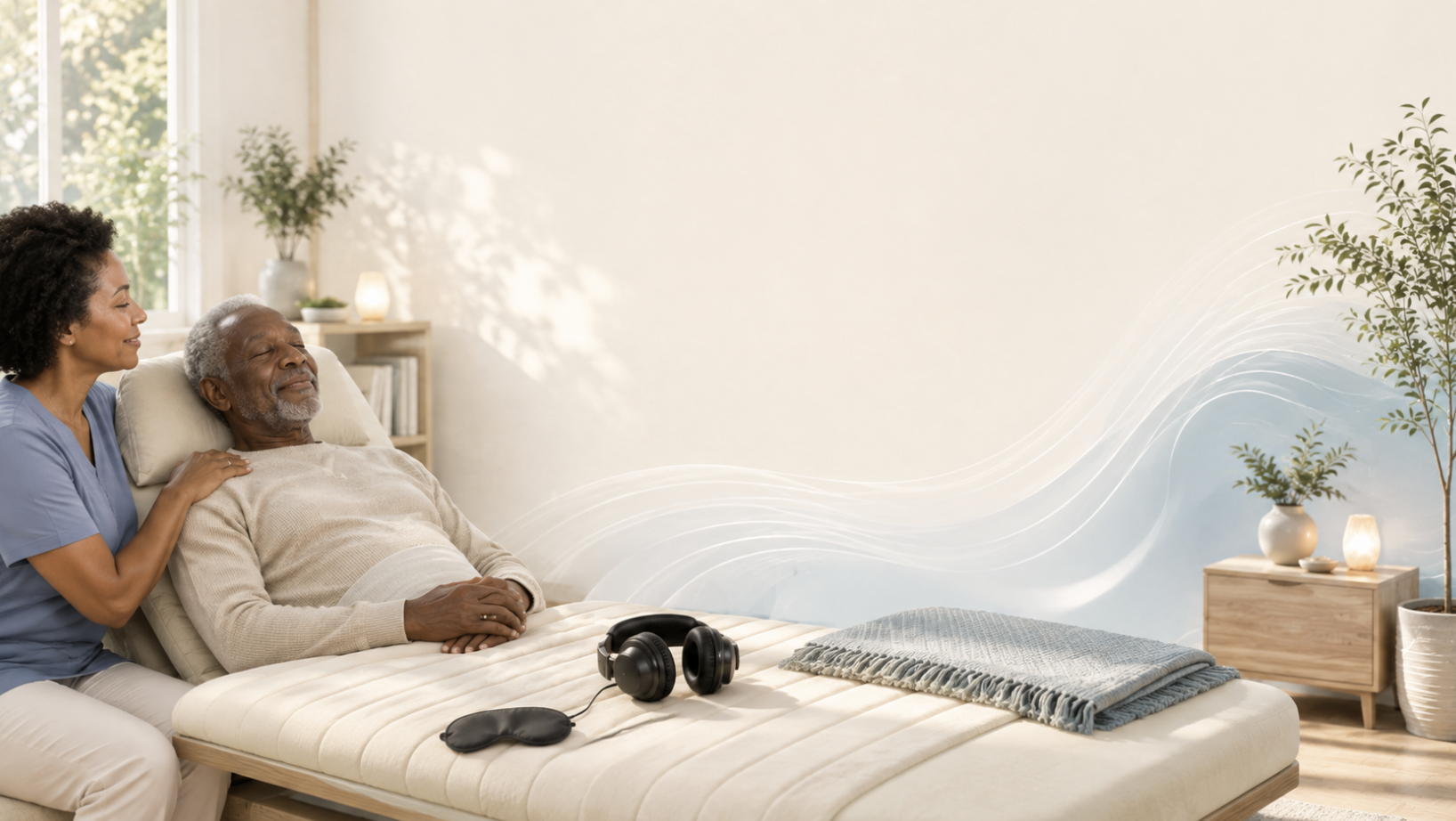
Vibroacoustic Therapy uses low-frequency sound delivered through specialized equipment so that sound is both heard and felt through the body.
Research has explored VAT across a range of acute and chronic pain conditions.
A 2022 scoping review examined 20 studies of vibroacoustic therapy in adults experiencing pain. Most of the research involved chronic pain, with low-frequency sound delivered through vibroacoustic equipment. The review identified pain reduction as a central outcome across the existing body of research.
In Move Again, VAT is used at the beginning of the process to help address pain, tension and regulation before movement.
Explore the research
Kantor J, et al. — Exploring vibroacoustic therapy in adults experiencing pain: a scoping review
BMJ Open, 2022The review examined 20 VAT studies involving adults experiencing acute or chronic pain and provides an overview of frequencies, treatment approaches and pain-related outcomes studied in the field.
-
There is also a substantial body of research examining vibration-based interventions specifically in people with knee osteoarthritis.
A systematic review and meta-analysis of 14 randomized controlled trials involving 559 people with knee osteoarthritis found that vibration combined with strengthening produced significant improvements in:
Pain
Physical function
Timed Up and Go performance
Knee-extensor strength
Lower-body power
This supports the broader use of vibration alongside strengthening when the objective is improved knee function and mobility.
Explore the research
Wong RM, et al. — Effects of Whole-Body Vibration Therapy on Knee Osteoarthritis: A Systematic Review and Meta-Analysis of Randomized Controlled Trials
14 randomized trials | 559 participants
The researchers found significant improvements across multiple measures of pain, function, mobility and strength when vibration was combined with strengthening exercise.
-
Movement isn't simply something we add after the pain goes away.
Movement is part of the strategy.
The American Academy of Orthopaedic Surgeons recommends supervised exercise, unsupervised exercise and aquatic exercise to improve pain and function in people with knee osteoarthritis. This recommendation is based on its clinical-practice review of the available evidence.
That matters because knee pain can easily create a cycle:
Pain → Less Movement → Less Strength → Less Capacity
Move Again is designed to begin reversing that cycle at an appropriate starting point.
Explore the research
American Academy of Orthopaedic Surgeons — Management of Osteoarthritis of the Knee Clinical Practice Guideline
AAOS strongly supports exercise as part of nonoperative management of knee osteoarthritis.
-
Backward walking is one of the foundational movements used in Move Again and in the Knees Over Toes Guy approach.
It is also supported by clinical research in people with knee osteoarthritis.
A systematic review and meta-analysis published from research completed through 2025 evaluated 13 randomized controlled trials of backward walking added to rehabilitation.
The combined results showed significant improvements in:
Pain
Disability
Physical function
The analysis found moderate-to-large effects for both reduced pain and improved disability measures.
That makes backward walking more than an interesting exercise.
It is a well-studied movement strategy for painful knees.
Explore the research
Lin L-H, et al. — Effectiveness of backward walking exercises combined with conventional rehabilitation programs on managing pain intensity and disability in patients with knee osteoarthritis
13 randomized controlled trials
Backward walking combined with rehabilitation significantly reduced pain and improved disability in people with knee osteoarthritis.
-
Once movement becomes possible, we need to build capacity.
That means strengthening the muscles that help support the knees and progressively increasing what the body can tolerate.
A meta-analysis of 17 randomized clinical trials involving 1,705 people with knee osteoarthritis found that resistance exercise significantly improved:
Pain
Stiffness
Physical function
More recent research continues to support resistance training for knee osteoarthritis, with improvements reported across pain, stiffness and functional outcomes.
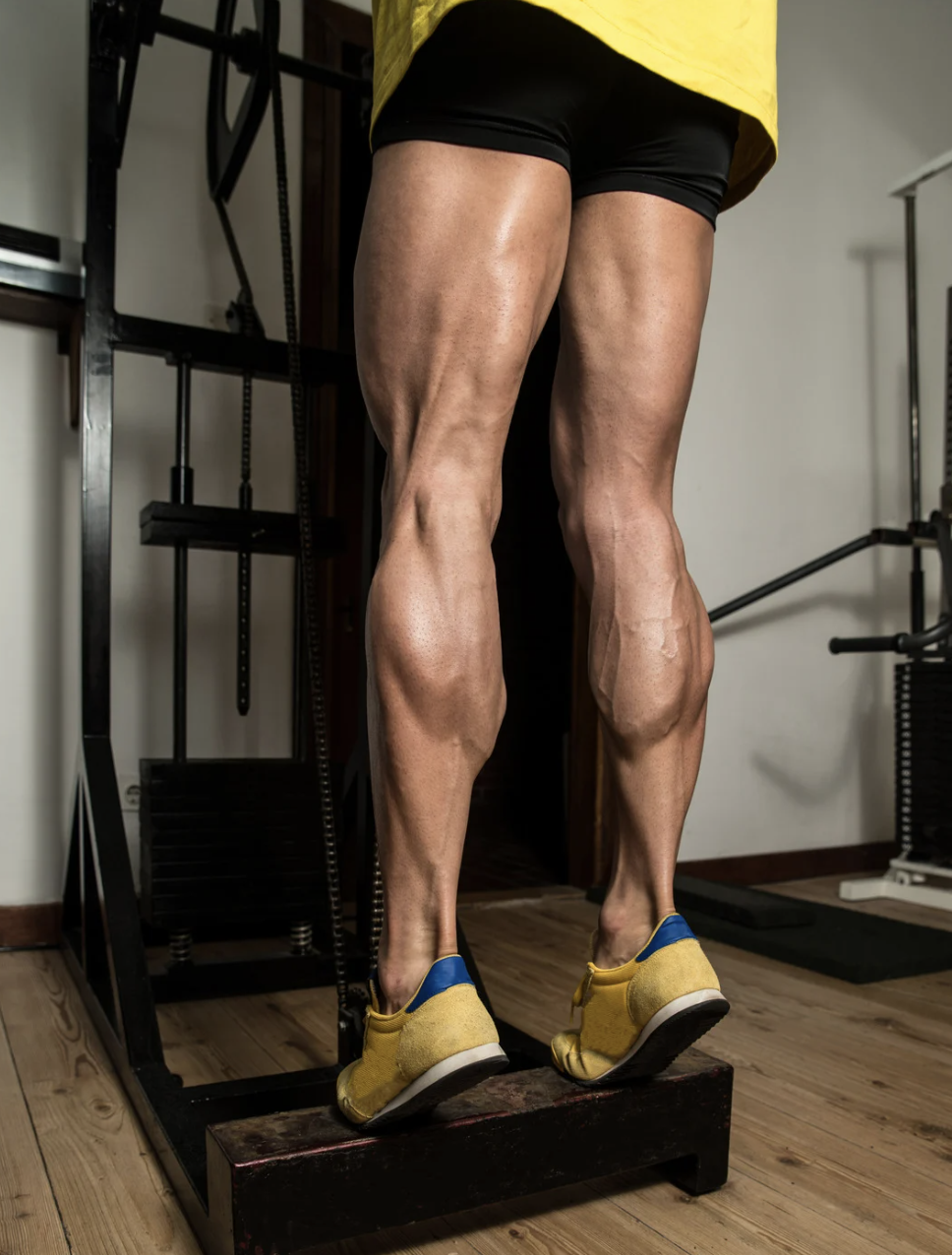
This is why Move Again progresses beyond simply stretching or moving the knee.
We want to build stronger legs that can do more.
Explore the research
Li Y, et al. — The effects of resistance exercise in patients with knee osteoarthritis: a systematic review and meta-analysis
17 randomized trials | 1,705 participants
Resistance exercise significantly reduced pain and stiffness while improving physical function.
How the Pieces Come Together
Each part of Move Again has a job.
VAT
Address pain, tension, and regulation, and help create an entry point into movement.
Movement
Begin using the knees and lower body at an appropriate level.
Backward Walking
Build knee tolerance, coordination, and movement capacity through a research-supported exercise.
Progressive Strengthening
Strengthen the muscles and movement patterns that support better function.
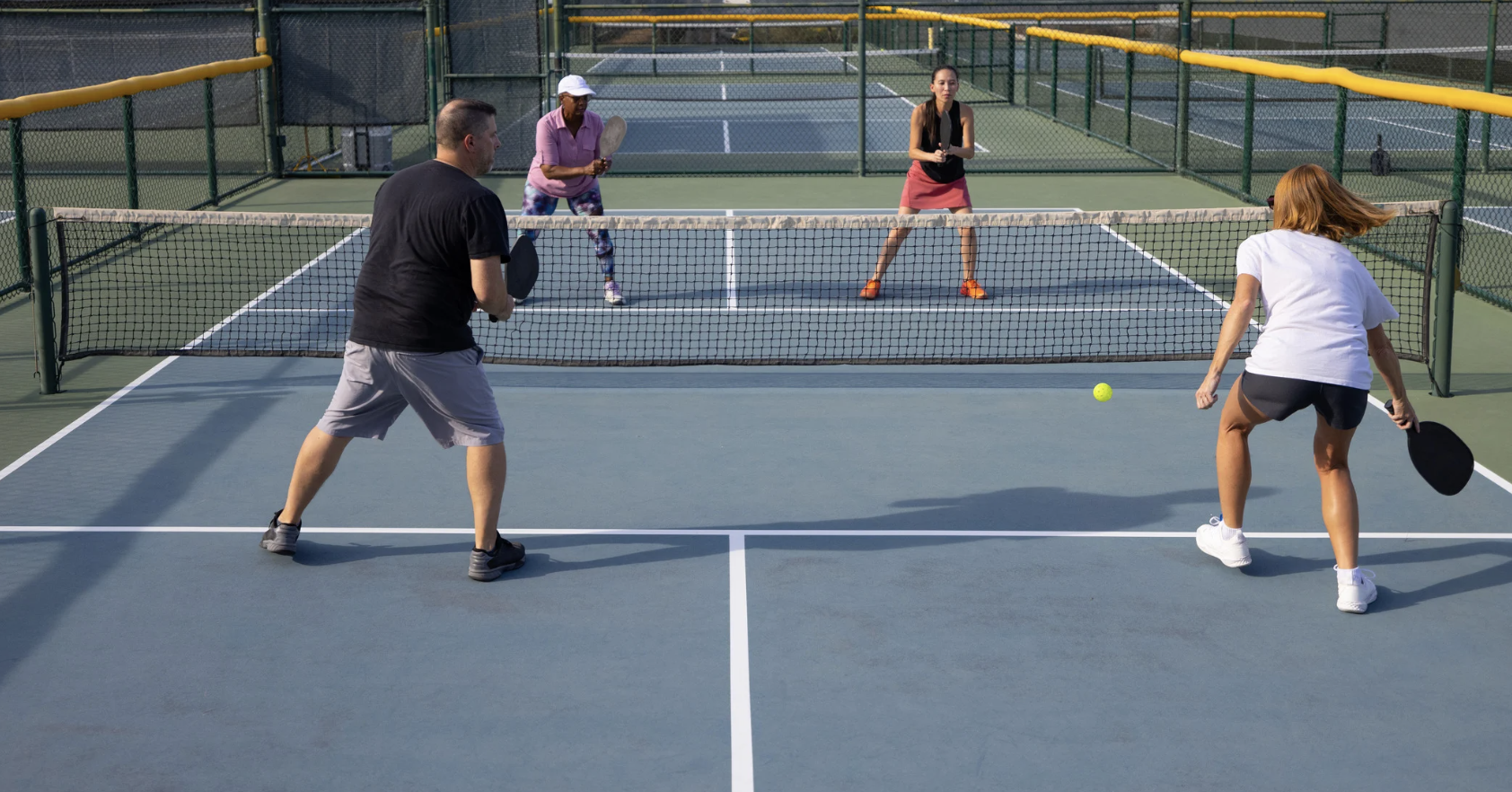
Pickleball
Apply that capacity to the movements you actually want to perform.
VAT → MOVE → STRENGTHEN → PLAY
The research gives us the building blocks.
Move Again puts them into a structured process designed to help you actually do the work, measure your progress, and keep building.