
Vibroacoustic Therapy in Hospice & Palliative Care
Supporting Comfort, Relaxation, and Connection
Hospice and palliative care are centered on comfort, quality of life and support for both individuals and the people who care for them.
Vibroacoustic Therapy (VAT) uses low-frequency sound delivered through specialized equipment so that sound is both heard and physically felt. Research into its use in palliative and supportive care is still emerging, with studies exploring relaxation, well-being, stress regulation and pain.
VAT is not curative and does not replace medical, nursing, hospice or palliative care.
Its potential role is much simpler:
to help create moments of greater comfort, ease and presence.
What Does the Research Suggest?
VAT has been studied directly with people receiving palliative care.
A feasibility study involved nine people with advanced cancer receiving palliative care. Participants received a 30-minute music therapy intervention incorporating vibroacoustic stimulation.
Responses varied. Some participants experienced the intervention as calming, while others found it overwhelming, and the study did not establish significant group-level improvements in pain, relaxation, or well-being.
The findings reinforce something particularly important in hospice care: vibroacoustic experiences should be individualized to the person, their condition, preferences, and response.
Warth et al., 2015. Effects of vibroacoustic stimulation in music therapy for palliative care patients: a feasibility study.
A brief vibroacoustic experience improved momentary well-being in people with cancer.
In a randomized crossover study, 48 people with cancer received a 10-minute vibroacoustic sound-bed intervention and, at another time, a resting control condition.
Following the vibroacoustic intervention, participants reported significant improvements in overall momentary well-being as well as measures including inner balance, vitality, mood, satisfaction, and sensations associated with warmth and relaxation. Pain did not significantly improve.
For supportive care, that distinction matters. A meaningful outcome does not always have to be symptom elimination. Sometimes it may simply be feeling more settled or comfortable in the moment.
Feeling the Sound — Short-Term Effect of a Vibroacoustic Music Intervention on Well-Being and Subjectively Assessed Warmth Distribution in Cancer Patients.

Pain is one of the more frequently studied applications of VAT, but the evidence is not yet conclusive.
A 2022 scoping review examined 20 studies involving adults experiencing acute, chronic, or experimentally induced pain.
Some studies reported improvements in pain-related outcomes. However, researchers found substantial differences in treatment protocols, frequencies, equipment, and study design. They concluded that the research remains too limited to establish VAT's effectiveness for pain management or determine an optimal protocol.
For hospice and palliative care, VAT may therefore be considered a complementary comfort measure for someone experiencing pain, while pain management itself remains under the direction of the healthcare team.
Kantor et al., 2022. Exploring vibroacoustic therapy in adults experiencing pain: a scoping review.
Research is also exploring how low-frequency vibration may influence the body's stress response.
In a double-blind randomized pilot study involving 54 participants experiencing experimentally induced acute stress, both groups listened to music, while one group also received low-frequency vibration.
Researchers did not find significant between-group differences in participants' subjective ratings of stress or muscle relaxation. However, they did find significant differences favoring the vibration group in certain measures of heart-rate variability associated with autonomic nervous system activity.
More recent research using ECG and EEG measurements has also reported increased parasympathetic activity, reduced arousal, and increased relaxation following vibroacoustic stimulation.
Together, these findings provide a developing physiological basis for continued research into VAT as a supportive relaxation and stress-regulation experience.
Kantor et al., 2022. Effect of low frequency sound vibration on acute stress response in university students — Pilot randomized controlled trial.
Fooks & Niebuhr, 2024. Effects of Vibroacoustic Stimulation on Psychological, Physiological, and Cognitive Stress.
Sharing the Experience: Patient + Loved One
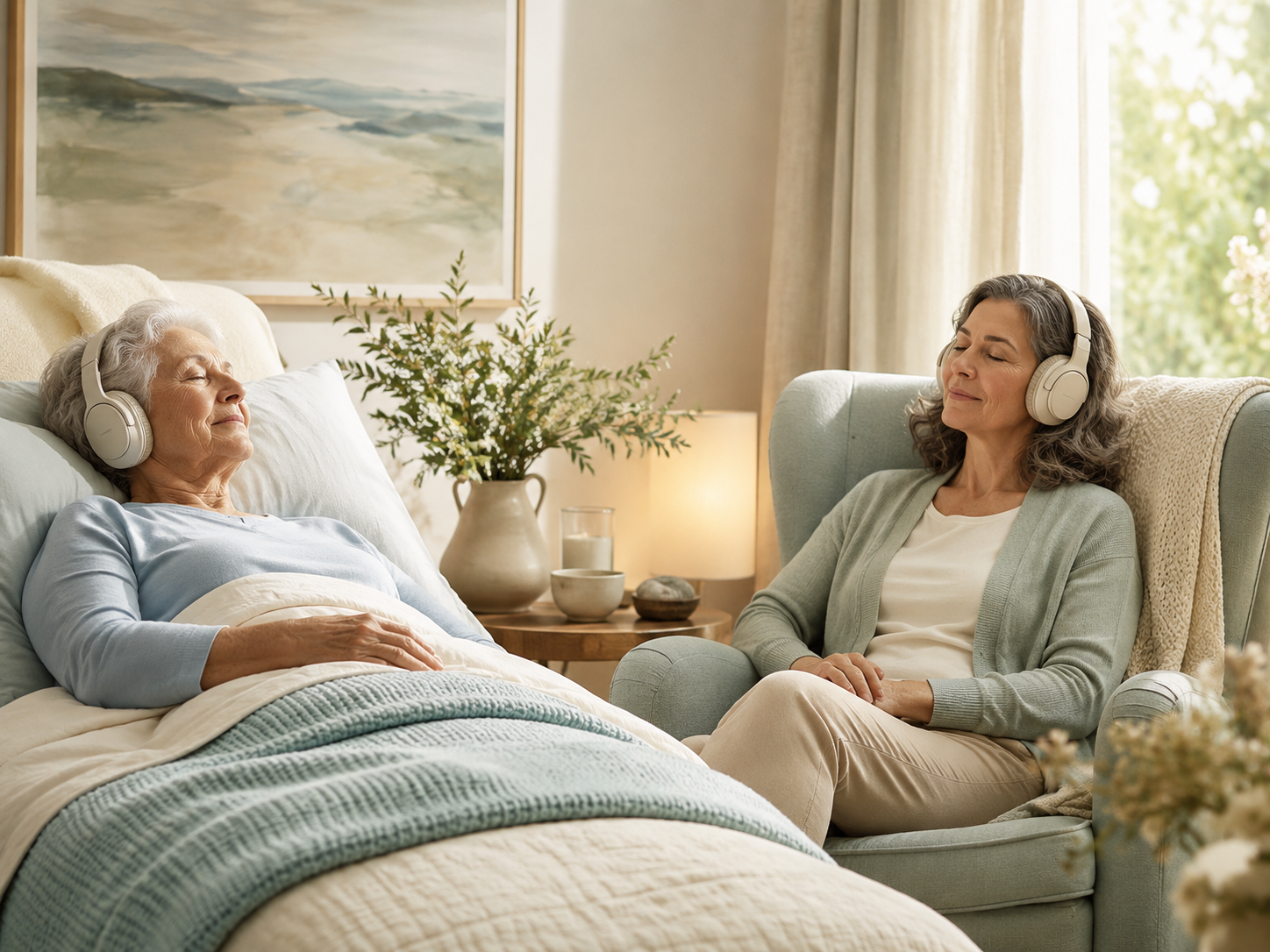
Serious illness affects more than the person receiving care. Spouses, children, family members and other caregivers may be carrying their own fear, exhaustion, grief and physical tension while caring for someone they love.
That raises another question:
What might it mean for two people to share a calming sensory experience together at a time when comfort and connection matter deeply?
Published research specifically examining a patient and loved one receiving VAT simultaneously does not appear to exist yet.
There is, however, relevant research from hospice music therapy showing that shared therapeutic experiences can influence connection between patients and the people they love.
In a randomized crossover study, 10 hospice patients and their family caregivers participated together in both a 15-minute music therapy session and a 15-minute chaplaincy session.
During music therapy, caregivers demonstrated significantly greater affective intimacy and physical intimacy toward their dying loved ones than during chaplaincy.
Kim & Dvorak, 2018. Music therapy and intimacy behaviors of hospice family caregivers in South Korea: A randomized crossover clinical trial.
Another study followed 10 patient-caregiver pairs receiving home-based hospice and palliative care. A shared, song-centered music therapy intervention using life review was associated with improvements in measures of quality of life and family relationship.
Hong & Kim, 2021. The Effect of Song-Oriented Music Therapy Using Life-Retrospective Techniques on the Quality of Life and Family Relationship of Patients and Primary Family Caregivers in Home-Based Hospice-Palliative Care.
Read the English abstract (scroll down to see the abstract) →
Connection at End of Life
These studies are not studies of VAT, and they do not establish that shared VAT will produce the same outcomes.
They do, however, point to something meaningful about supportive care:
There can be value in giving two people an opportunity to experience something together.
For a caregiver, so much of this season may involve doing something for the person they love — helping, watching, managing, tending and responding.
A shared restorative experience creates a different possibility:
simply being with them.
Comfort. Stillness. Touch. Presence. Connection.
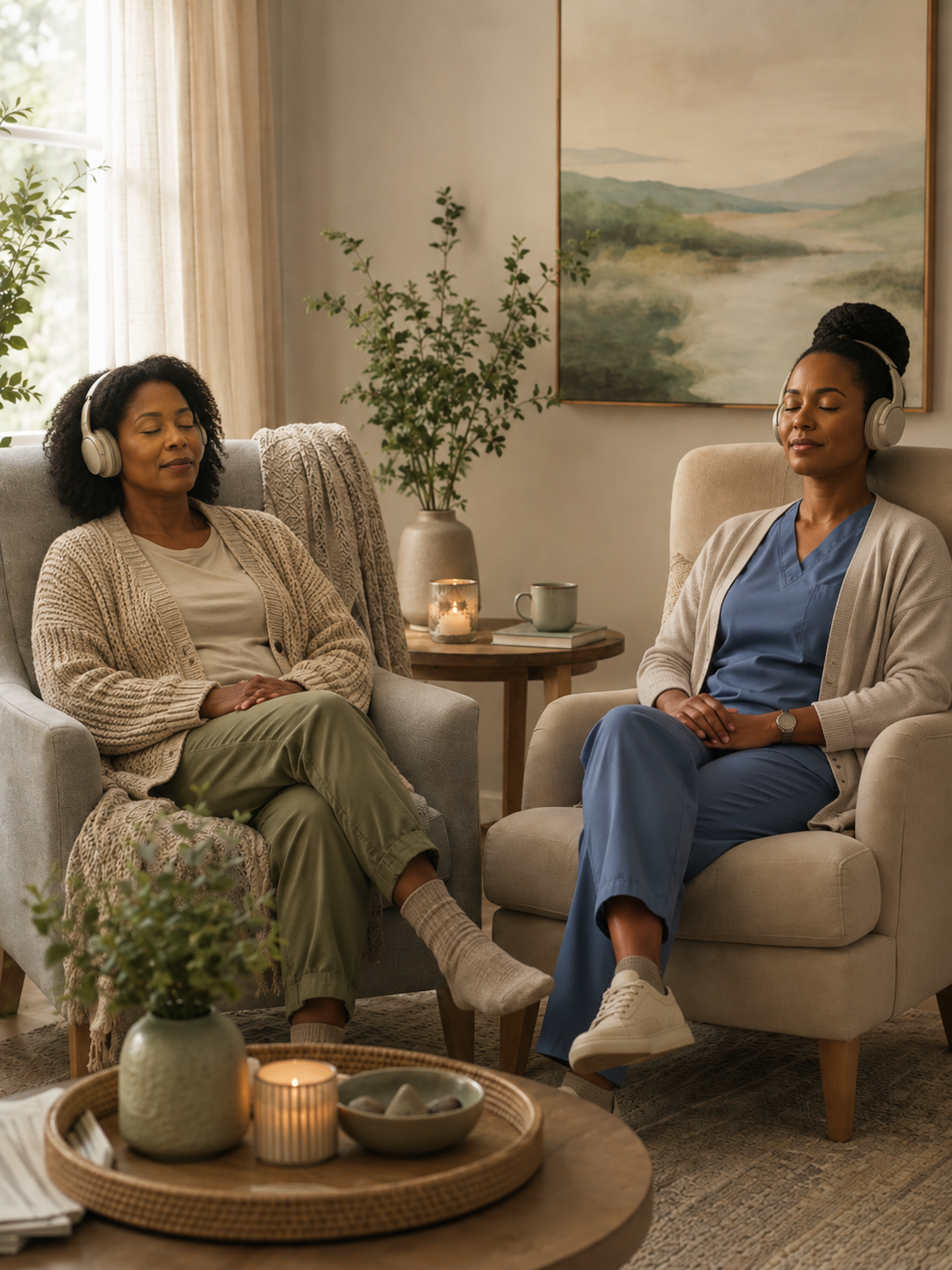
Supporting the Wider Circle of Care
Caregiving also places significant demands on the family members and professionals surrounding the patient.
Brief VAT experiences may offer family caregivers and hospice professionals an opportunity for intentional rest, relaxation and nervous-system downshifting.
For Family Caregivers
A restorative experience centered on their own need for rest and regulation.
For Hospice Teams
Brief 15- to 23-minute VAT experiences that can be incorporated into staff wellness programming.
Supporting those who provide care can help sustain the presence, patience, and compassion that hospice care asks of them.

A Complement to Care
LifeTone Studio approaches VAT in hospice and palliative care settings as a complementary form of supportive care.
VAT does not replace medicine, nursing, counseling, chaplaincy, music therapy or other hospice services. Appropriate screening, consent, and collaboration with the individual's care team remain essential.
The goal is not to fix what cannot be fixed.
It is to explore another way of supporting comfort, dignity, connection and presence during an important season of life.
Sometimes care is simply helping someone feel a little more comfortable while they are here — and helping the person beside them be fully present with them.
Interested in Learning More?
If you are exploring supportive approaches for hospice or palliative-care patients, family caregivers or your care team, we would welcome the conversation.