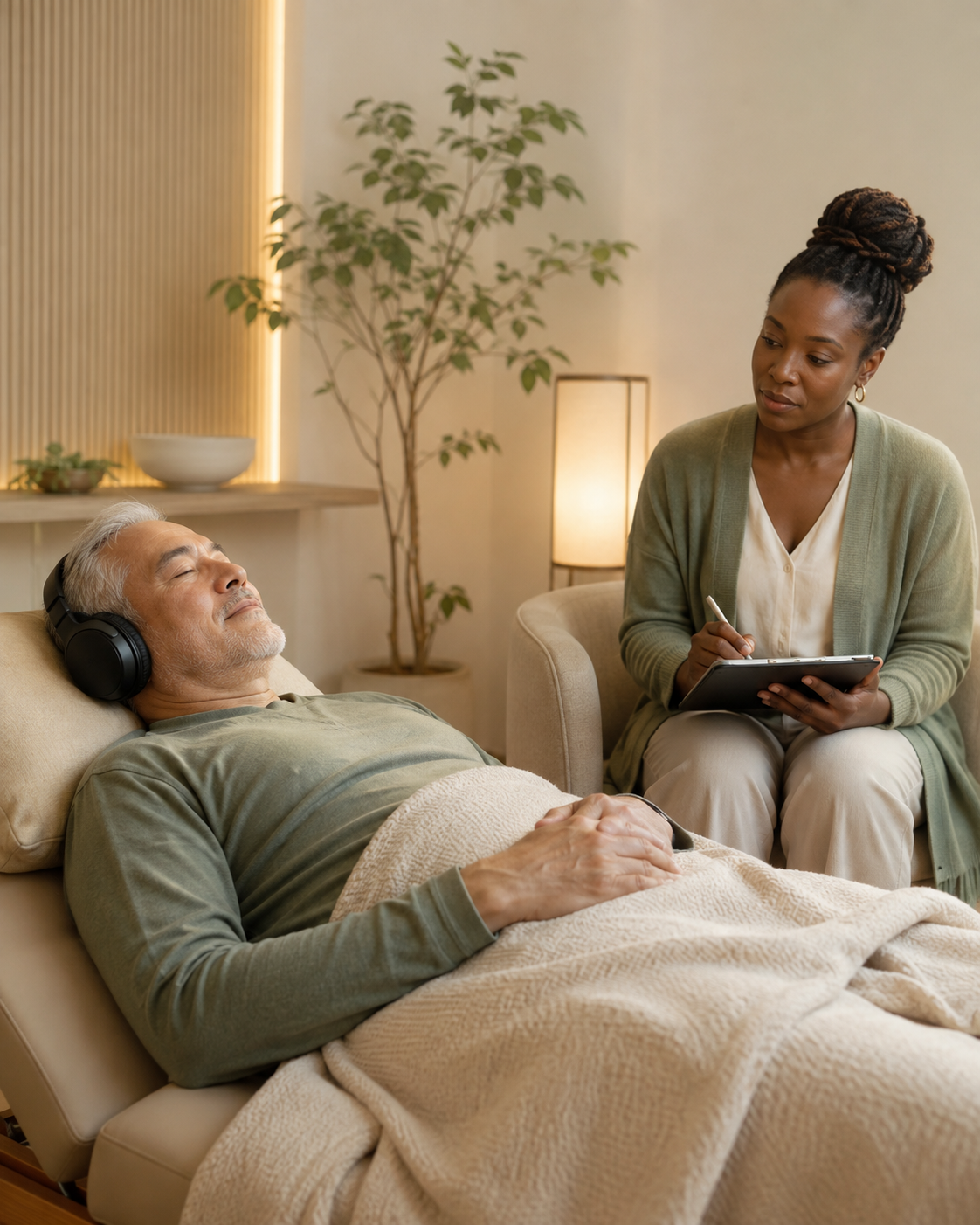
Individualized Vibroacoustic Therapy

Low-frequency sound and vibration shaped around a specific need

Vibroacoustic therapy is not one uniform experience delivered the same way to every person.

Different frequencies, session lengths, sound content, positions, and methods of delivery may be selected according to the person’s primary concern, health history, comfort, goals, and response over time.

LifeTone Studio offers individualized VAT for adults navigating specific physical, neurological, regulatory, recovery, and supportive-care needs. Some people come with a diagnosed condition. Others come because a persistent symptom—such as pain, stiffness, disrupted sleep, body bracing, or difficulty recovering—is affecting daily life.

The purpose of the first conversation is not to assign a generic relaxation track. It is to understand what the person is experiencing and determine whether a particular VAT approach is worth exploring.

Not ready to schedule?

Exploring VAT for an Organization?

Broader VAT applications are available for the people and communities you serve.

LifeTone Studio also works with hospices, care communities, rehabilitation-adjacent providers, caregiver programs, wellness organizations, and other groups interested in non-dementia applications of vibroacoustic therapy.

Organizational services may include education, demonstrations, pilot programs, participant sessions, caregiver or staff support, and recurring onsite delivery.

More Than Choosing a Frequency

An individualized research-informed protocol includes how, where, and why stimulation is delivered.

Frequency matters, but it is only one part of the VAT experience.

LifeTone considers:

  • the primary symptom or functional concern;

  • diagnosis and relevant health history;

  • where discomfort, tension, or movement limitations are experienced;

  • whether stimulation should be full-body or localized;

  • sensitivity to sound, vibration, positioning, or session length;

  • whether the goal involves immediate comfort, repeated support, rehabilitation, sleep, recovery, or quality of life;

  • and what the person notices during the hours or days following a session.

A protocol may include decisions about:

  • frequency or frequency range;

  • continuous or rhythmic stimulation;

  • table, chair, bolster, or localized delivery;

  • music, tonal content, or pure-frequency tracks;

  • session length;

  • positioning and physical supports;

  • and whether the person begins with one exploratory session or a structured series.

Individualization does not mean making assumptions based only on a diagnosis. It means using the person’s condition, symptoms, goals, comfort, and response to shape the experience.

Needs That May Lead Someone to Explore VAT

Specific concerns may call for different frequencies, delivery methods, and observations

People come to LifeTone for different reasons. Some are managing a diagnosed condition. Others are looking for support with a persistent symptom or functional concern.

The following categories help explain where individualized VAT may fit.

Pain and Persistent Physical Symptoms

Supporting comfort, ease of movement, and the effects pain has on daily life

People may explore VAT while navigating concerns such as:

  • fibromyalgia;

  • chronic back pain;

  • arthritis-related discomfort;

  • persistent muscular pain or soreness;

  • pain that affects sleep, movement, or daily activity;

  • tension associated with guarding or bracing;

  • and localized discomfort following injury, repetitive activity, or physical strain.

For someone seeking pain support, LifeTone may pay attention to the location and intensity of discomfort, changes in muscular tension, ease of movement, how long any effect lasts, and whether repeated sessions produce a recognizable pattern.

The goal is not simply to create a pleasant experience. It is to determine whether VAT offers meaningful support for comfort, movement, rest, or function.

Neurological and Movement-Related Needs

Additional sensory input for people navigating changes in movement, tone, and function

VAT has been studied and used in connection with neurological and movement-related concerns, including:

  • Parkinson’s disease;

  • stroke recovery;

  • traumatic brain injury;

  • stiffness or increased muscle tone;

  • slowed or reduced movement;

  • tremor-related concerns;

  • gait and coordination challenges;

  • and localized rehabilitation involving the hands, arms, legs, or other affected areas.

In these situations, VAT may be delivered throughout the body or concentrated in a particular area.

LifeTone may observe changes in stiffness, movement initiation, limb comfort, coordination, perceived clarity, fatigue, body awareness, and participation in rehabilitation activities.

VAT does not replace physical, occupational, neurological, or medical care. It may be explored as an additional supportive input within a larger plan of care or recovery.

Stress is not always experienced only as a thought or emotion. It may appear physically through:

  • difficulty settling;

  • body bracing or guardedness;

  • disrupted or fragmented sleep;

  • persistent muscle tension;

  • shallow or restricted breathing;

  • difficulty transitioning out of high-alert states;

  • exhaustion without the ability to rest deeply;

  • and prolonged activation following trauma, caregiving, illness, or sustained demand.

For these concerns, the focus is more specific than general relaxation.

LifeTone may observe how readily the person settles, changes in breathing or muscular tension, sleep later that night, nighttime waking, next-day energy, and whether the person becomes better able to move from activation into rest.

VAT may also be explored in relation to:

  • athletic recovery;

  • post-training soreness;

  • muscular fatigue;

  • recovery between rehabilitation sessions;

  • repetitive physical demand;

  • preparation for or recovery after competition;

  • and physical decompression following demanding work or caregiving.

A recovery-focused session may be structured around soreness, muscular heaviness, range of movement, perceived recovery, sleep, and readiness to resume activity.

This use of VAT is not limited to athletes. It may also be relevant for people whose work, rehabilitation, caregiving responsibilities, or daily routines place ongoing physical demands on the body.

Sleep, Stress, and Persistent Activation

When the body remains alert, guarded, or unable to settle

Physical Recovery and Performance

Supporting the body before, between, and after periods of physical demand

Some uses of VAT are less focused on performance or rehabilitation and more focused on helping a person feel supported within a difficult or complex health experience.

LifeTone may work with individuals, families, care teams, or organizations supporting people affected by:

  • hospice or palliative-care needs;

  • cancer-related fatigue or discomfort;

  • chronic or complex illness;

  • long-term care needs;

  • reduced mobility;

  • caregiver strain;

  • limited verbal communication;

  • and significant symptom burden.

In these settings, meaningful outcomes may include visible settling, reduced distress, comfort, responsiveness, sleep, connection with caregivers, or simply creating a calmer and more supported experience.

Organizations exploring hospice, palliative, neurological, caregiver, or supportive-care programming can learn more through LifeTone’s organizational pathway.

Complex Illness, Hospice, and Supportive Care

Prioritizing comfort, dignity, connection, and quality of life

What Participation Looks Like

A calm, supported experience shaped around the person

VAT can be adapted to the person—not the other way around.

ocol, the person may:

  • hear sound through headphones or speakers;

  • feel vibration throughout the body or in a specific area;

  • use pillows, bolsters, blankets, or other physical supports;

  • remain quiet, talk, or report what they notice;

  • and participate with a caregiver nearby when appropriate.

There is no performance requirement.

A person does not need to meditate, concentrate, describe the vibration perfectly, or produce a dramatic response. LifeTone pays attention to comfort, tolerance, and the broader pattern of response.

What LifeTone Observes

Looking beyond “Did they enjoy the session?”

The questions LifeTone asks depend on why the person came.

Observations may include:

  • pain location and intensity;

  • stiffness, tone, or ease of movement;

  • body bracing and muscular release;

  • mental clarity or alertness;

  • ability to settle;

  • sleep onset and nighttime waking;

  • fatigue and energy;

  • mood or responsiveness;

  • participation in daily activity;

  • recovery following exertion;

  • caregiver observations;

  • and effects that appear later in the day or the following day.

The purpose is not to force every response into a predetermined outcome. It is to notice whether a meaningful and repeatable pattern emerges.

The Individual VAT Pathway

A structured process from first conversation through observation and review

The Pathway

  • Initial Conversation

We begin by discussing the primary concern, relevant health history, current care, sensitivities, mobility, comfort needs, and what the person hopes to explore.

  • Session Planning

LifeTone selects an initial approach based on the intended purpose of the session.

This may include decisions about frequency, delivery method, positioning, duration, sound content, and whether stimulation should be full-body or localized.

  • Initial Session or Structured Series

Some people begin with one exploratory session.

Others may benefit from a short series when the goal is to observe patterns involving pain, movement, sleep, neurological support, physical recovery, or function.

  • Observation Between Sessions

What happens after the session may be as important as what happens during it.

The participant or caregiver may be asked to notice changes in sleep, pain, movement, energy, mood, recovery, comfort, or other goal-specific areas.

  • Review and Adjustment

Based on the response, LifeTone may:

  • continue the protocol;

  • adjust the frequency or session length;

  • change positioning or delivery;

  • try another approach;

  • recommend a structured series;

  • discuss home continuity;

  • or determine that VAT is not producing a meaningful enough response to continue.

LifeTone’s Individual VAT Pathway moves beyond a one-time session. It provides a structured way to identify the person’s primary concern, select an initial approach, observe meaningful changes during and between sessions, and adjust the plan based on what emerges over time.

Research-Informed, Person-Centered Application

Research helps guide the protocol without replacing careful observation

LifeTone’s individualized VAT work draws from research involving vibroacoustic therapy, low-frequency sound stimulation, rhythmic sensory stimulation, and related vibration-based methods.

Areas of research include:

  • fibromyalgia and chronic pain;

  • neurological and movement-related conditions;

  • stress and autonomic regulation;

  • sleep;

  • physical recovery;

  • cancer-related symptom support;

  • dementia;

  • and comfort and quality of life.

The depth of evidence differs by condition. Some applications have controlled trials. Others are supported by pilot studies, case reports, clinical experience, or emerging research.

LifeTone uses research to help inform protocol selection, session structure, observation, and responsible expectations. Research is not used to promise that every person will respond in the same way.

Not ready to schedule?

Who May Be Appropriate for Individualized VAT?

For adults seeking a noninvasive supportive approach to a specific need

VAT may be worth exploring for adults who:

  • have a specific symptom, diagnosis, or functional concern;

  • are seeking a noninvasive supportive modality;

  • are able to tolerate sound and low-frequency vibration;

  • want support alongside—not instead of—existing medical or rehabilitative care;

  • are willing to observe their response over one or more sessions;

  • or are seeking comfort and quality-of-life support.

Relevant health history, implanted devices, seizure sensitivity, pregnancy, recent procedures, acute illness, and other safety considerations should be discussed before participation.

Your Questions, Answered

Practical guidance before beginning individualized VAT

Ready to Explore Individualized VAT?

Begin with the concern—not with the frequency

You do not need to identify the correct frequency or decide on a protocol before reaching out.

The first step is a conversation about what you are experiencing, what care or support is already in place, and what you hope VAT may help you explore.

LifeTone works with organizations interested in dementia-focused support as well as broader applications involving hospice, pain, neurological needs, caregiver support, physical recovery, and quality-of-life programming.

Not ready to schedule?

Exploring VAT for an organization?